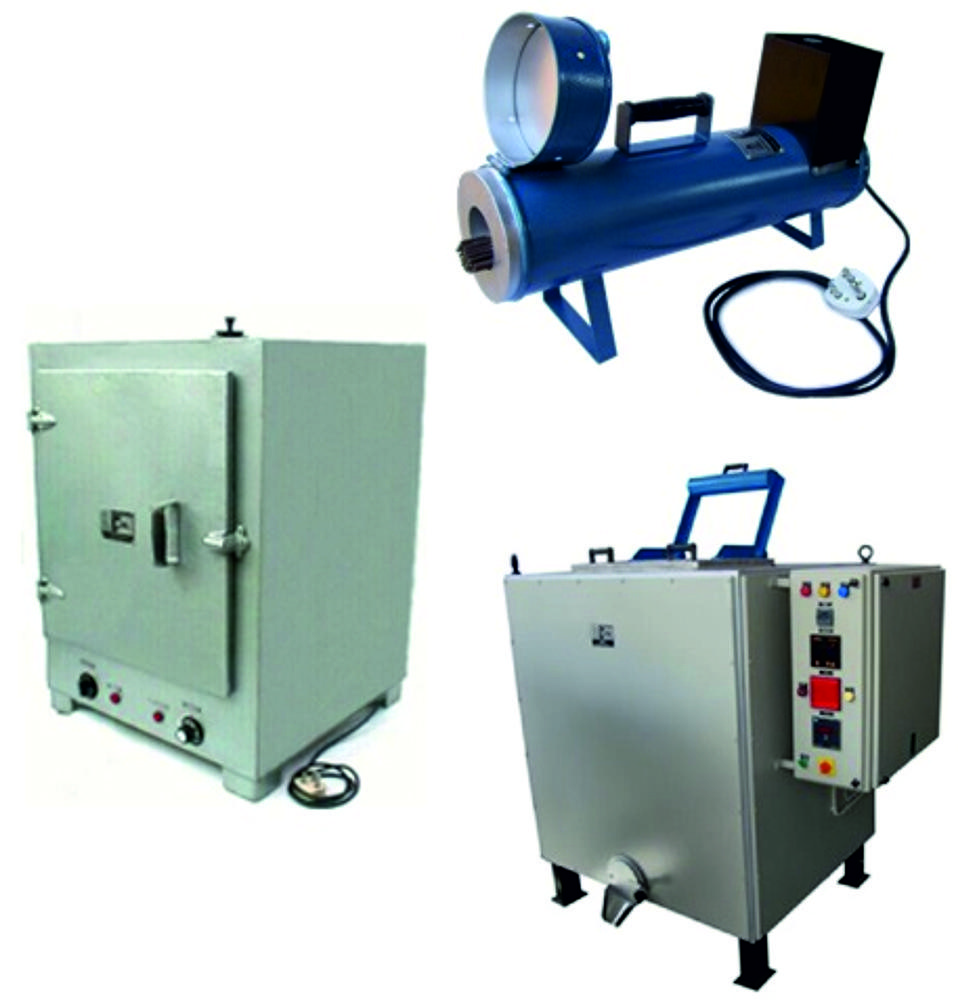
Home » Flux & Electrode Drying Ovens
The Flux & Welding Electrode drying ovens are used mainly at industrial sites where they are used to heat-treat welding consumables to remove moisture as per guidelines of consumables manufacturers and to get better weld.
Aavishkar Group is proud to be associated with Haridas Instruments & Equipment Company for the supply & Service Support of the following categories of items.
Kindly browse through the catalogue of the listed products and submit a request for the proposal of your desired equipment. Our team will surely get back to you with the same.
A flux & electrode drying oven is a purpose-built industrial oven designed to remove moisture from welding electrodes and flux materials before use. Moisture in consumables can lead to defects like hydrogen-induced cracking, porosity, and poor arc stability during welding. By maintaining a controlled temperature and humidity environment, these ovens ensure that consumables stay dry and perform reliably — ultimately improving weld quality and reducing rework.
To select the right oven for your application, consider these points:
Temperature range & stability: Ensure the oven can maintain required temperatures for both holding and rebaking cycles.
Capacity and loading style: Match chamber size and shelving to your production volume.
Portability vs. stationary design: Field jobs may require mobile units, whereas shop floors benefit from larger static models.
Control system features: Digital controllers, timers, and alarms improve process repeatability.
Energy efficiency and insulation: Better insulation reduces power consumption and operational cost.
These considerations help balance performance, safety, and lifecycle costs in industrial environments.
Drying duration depends on:
Material type: Low-hydrogen electrodes often require tighter control and extended heat cycles.
Initial moisture level: Wet consumables need longer drying.
Intended use: Holding ovens maintain dryness, while rebake ovens remove deeper moisture.
Typical temperature ranges for electrode conditioning are between 100°C to 150°C for holding and up to 300°C+ for rebaking heavier moisture content — always aligned with consumable manufacturer guidelines. Overheating can change coating characteristics and negatively affect weld performance, so precise control is key.