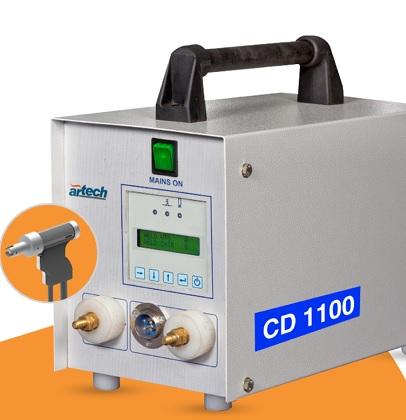
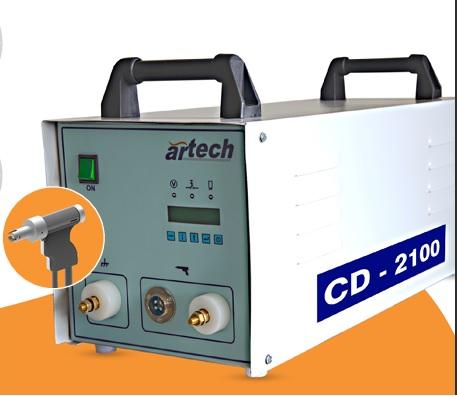
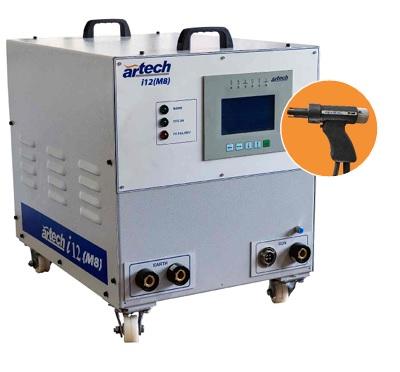
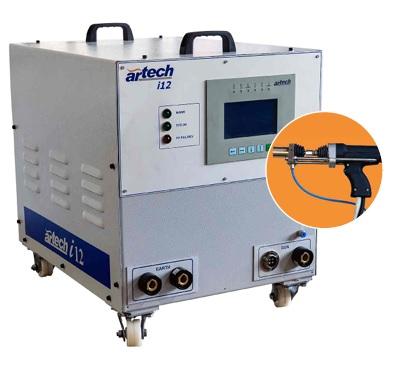
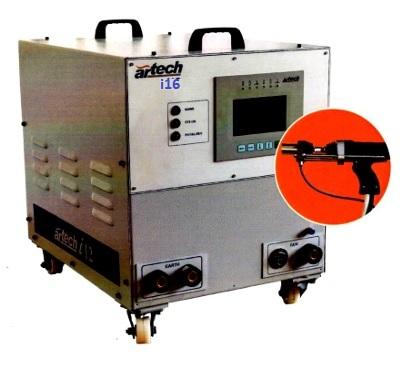
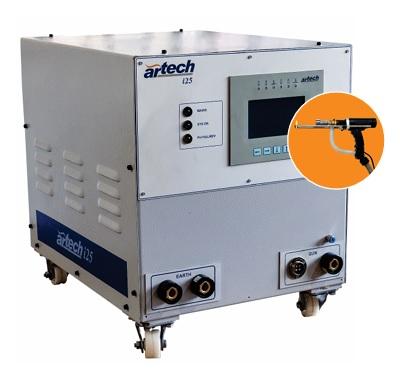
Stud welding is a process by which a metal stud is joined to a metal workpiece by heating & applying pressure to join both parts with an arc. The process involves an arc being ignited, between the face of the stud, and the surface of the workpiece. Once both parts are melted, the stud is smoothly pressed against the workpiece and joined together. Welding elements like threaded studs, pins, tapped pads, etc. are welded by an arc without additional material being required. As the stud is joined with the workpiece over the whole surface of the stud, the strength of the joint is even higher than the base material or the stud.
Kindly browse through the catalogue of the listed products and submit a request for the proposal of your desired equipment. Our team will surely get back to you with the same.
What exactly is a stud welding system and how does it work?
A stud welding system is a specialized welding setup designed to join metal studs or fasteners directly to a metal workpiece in one swift operation. During the process, an electrical arc is created between the stud and the work surface; this melts both surfaces momentarily. Once molten, the stud is pressed into place to form a strong metallurgical bond as the metal cools. The result is a reliable, permanent joint that is often stronger than the base material itself.
What types of stud welding are available and when should each be used?
There are two main stud welding methods:
Capacitor Discharge (CD) Stud Welding: Ideal for smaller studs and thinner base metals. It works extremely fast — often in milliseconds — and produces a nearly flush, clean finish.
Drawn Arc Stud Welding: Suited to larger studs and heavier structural applications. It offers deeper penetration and high strength, making it better for thicker materials and industrial use.
Choosing between them depends on stud size, material thickness, and the application’s structural demands.
What benefits does stud welding offer compared to conventional welding or mechanical fasteners?
Stud welding provides several advantages:
Speed and Efficiency: One-step attachment — no drilling, tapping, or prepping holes.
Strong, Consistent Joints: Welds penetrate across the stud’s entire surface area for uniform strength.
Clean Appearance: Particularly with CD welding, the backside of the workpiece remains undisturbed.
Versatility: Works with a wide range of metals and stud types, reducing secondary fabrication steps.
These benefits make stud welding ideal for applications where speed, reliability, and aesthetics matter.
How do I choose the right stud welding system for my project?
To select the right machine, consider these factors:
Stud diameter and length you need to weld
Material type and thickness of the base metal
Production volume — occasional use versus continuous operation
Required power supply (single-phase vs. three-phase)
Portability or automation features
If in doubt, consult with your equipment supplier to match your requirements with the appropriate system configuration.
What safety and maintenance practices should operators follow?
Stud welding involves high electrical energy and heat — so safety is essential. Operators should:
Wear proper PPE (welding helmet, gloves, flame-resistant clothing)
Ensure the work area is dry and well-ventilated
Keep cables and connections free from wear or damage
Follow manufacturer guidelines for periodic inspection and preventive servicing
Routine maintenance not only extends equipment life but ensures consistent weld quality and operator safety.