
Welding and fabrication involve a lot of technical shorthand — ARC, TIG, HAZ, WPS, kerf — that can be confusing even to people who work in the industry every day. This glossary defines the terms that come up most often in equipment selection, welding procedures, and quality inspection, in plain language, organized alphabetically so you can look up exactly the term you need.
Each entry below is a short, self-contained definition. If you’re researching a specific process or piece of equipment in more depth, look for the related in-depth guide linked from Aavishkar Group’s blog.
A
- ARC Welding — A group of welding processes that use an electric arc between an electrode and the workpiece to melt and join metal.
- Amperage — The strength of the welding current, measured in amps; it controls how much heat and penetration a weld gets.
- Arc Strike — An unintended, localized weld defect caused when the electrode accidentally touches the base metal outside the joint area.
B
- Bevelling — Cutting or grinding an angled edge on plate or pipe ends so a weld joint has enough depth and access for full penetration.
- Bead — The line of weld metal deposited during a single pass along a joint.
C
- CNC Cutting — Computer Numerical Control cutting, where a programmed machine guides a plasma, oxy-fuel, or laser cutting head along a precise path.
- Consumables — Items used up during welding — electrodes, filler wire, flux, shielding gas, and contact tips — that need regular restocking.
D
- Duty Cycle — The percentage of a 10-minute period a welding machine can operate at a given amperage before it needs to cool down.
- DCEN / DCEP — Direct Current Electrode Negative/Positive — the polarity setting of a welding machine, which affects penetration and bead shape.
E
- Electrode Drying Oven — An oven used to store and dry flux-coated or low-hydrogen electrodes so they don’t absorb moisture, which causes weld defects.
F
- Filler Metal — The material added to a joint during welding, either as a coated electrode, solid wire, or rod.
- Flux — A chemical compound applied to a joint or coated on an electrode to protect the weld pool from atmospheric contamination.
- Flux Recovery Unit — Equipment used in submerged arc welding (SAW) to reclaim and recycle unused flux, reducing material cost and waste.
- Fume Extraction System — A ventilation system that captures and filters welding fumes at the source to protect welder health and meet safety standards.
H
- HAZ (Heat-Affected Zone) — The area of base metal next to a weld whose microstructure and properties change because of the heat of welding, without melting.
- Heat Input — The energy delivered per unit length of weld, calculated from voltage, amperage, and travel speed; it affects HAZ size and weld strength.
K
- Kerf — The width of material removed by a cutting process (plasma, laser, or oxy-fuel); it must be accounted for in cutting programs for dimensional accuracy.
M
- Manipulator — A mechanized arm or column-and-boom system that moves a welding torch or head along a workpiece, used for long, repetitive, or heavy welds.
- MIG Welding — Metal Inert Gas welding (also called GMAW), which uses a continuously fed wire electrode and shielding gas — common for its speed and ease of automation.
N
- NDT (Non-Destructive Testing) — Inspection methods such as radiography and ultrasonic testing used to check weld quality without damaging the part.
O
- Orbital Welding — An automated welding process where the torch rotates around a fixed pipe or tube joint, used where consistent, repeatable quality is critical, such as pipelines and process piping.
- Oxy-Fuel Cutting — A cutting process that uses a fuel gas (such as acetylene or LPG) combined with oxygen to preheat and cut through metal, common in hand and semi-automatic cutting setups.
P
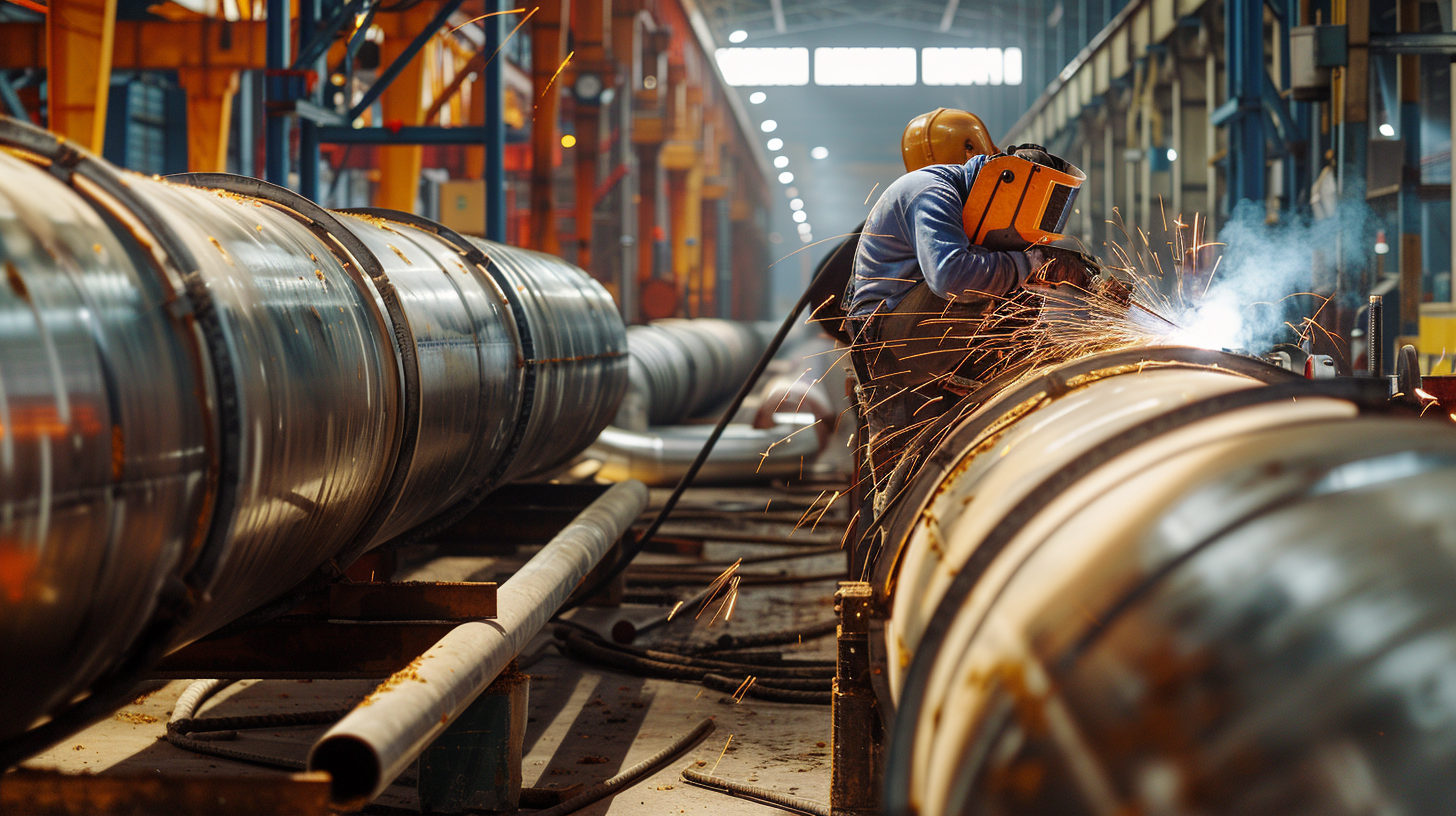
- Pipeline Welding — Welding used specifically for joining pipe sections in long-distance transport pipelines, typically governed by strict procedure and inspection standards.
- Porosity — Small gas pockets trapped in a weld as it solidifies, usually caused by contamination, damp electrodes, or poor shielding gas coverage.
- Positioner — A rotating fixture that holds and turns a workpiece so welding can be done in the most efficient position, often flat, instead of overhead or vertical.
- Preheat — Heating base metal before welding to slow the cooling rate, reduce hydrogen cracking risk, and manage the heat-affected zone, especially on thick or high-carbon steel.
- PQR (Procedure Qualification Record) — The documented record of the test results used to prove that a welding procedure produces a sound weld before it is used in production.
- PWHT (Post-Weld Heat Treatment) — Controlled heating of a completed weld after welding to relieve residual stress and improve toughness or hardness properties.
R
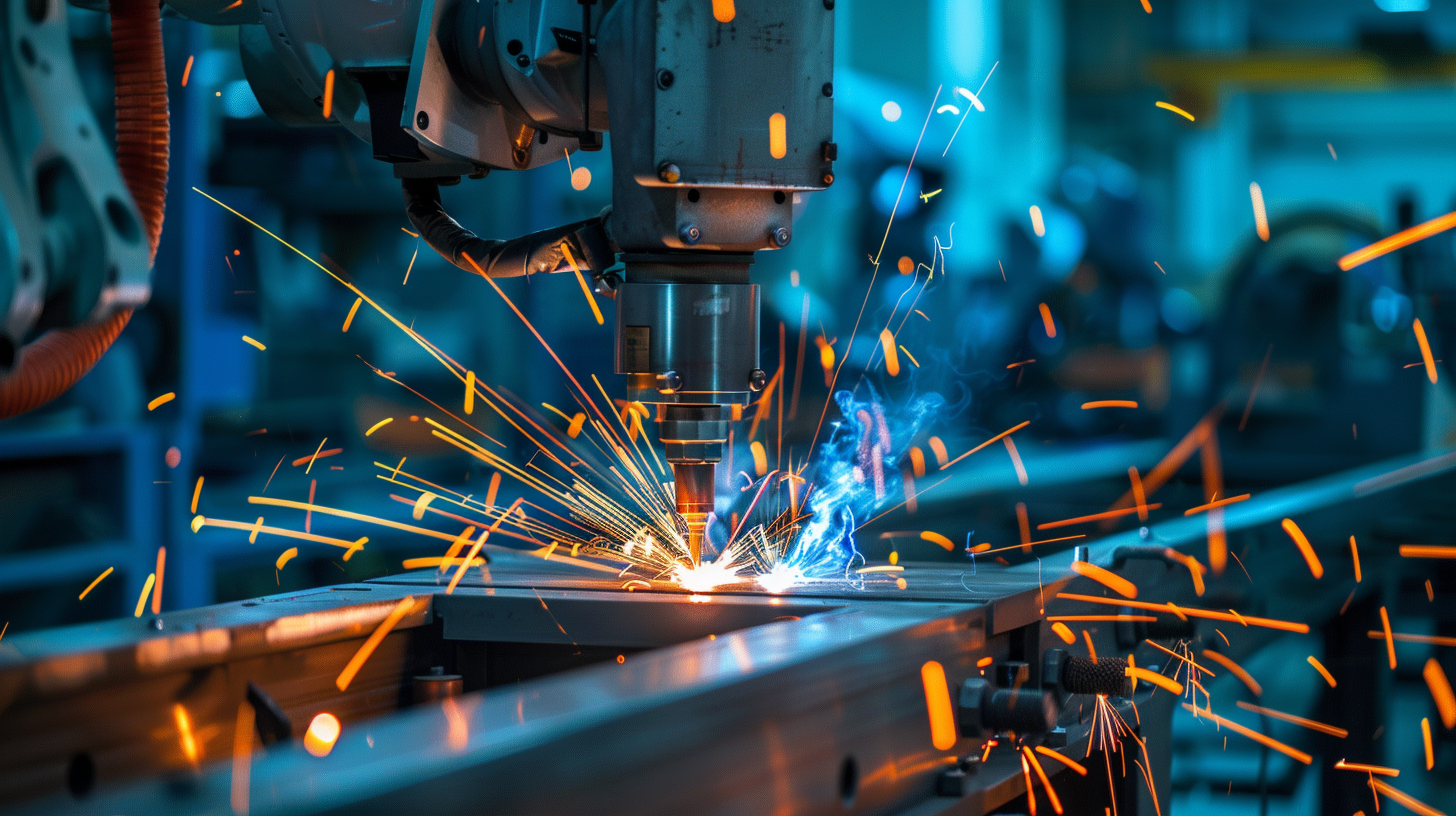
- Robotic Welding — Welding performed by a programmable robotic arm, used to increase consistency, speed, and output in high-volume fabrication.
- Root Pass — The first weld pass in a multi-pass joint, which fuses the two base-metal edges together and sets up the joint for the fill and cap passes.
S
- SAW (Submerged Arc Welding) — A high-deposition welding process where the arc is submerged under a blanket of granular flux, commonly used for thick plate and long straight or circular welds.
- Shielding Gas — A gas (such as argon, CO2, or a mix) fed around the arc during MIG or TIG welding to protect the weld pool from atmospheric contamination.
- Slag Inclusion — A weld defect where non-metallic slag byproduct gets trapped inside the weld metal instead of floating to the surface.
- Spatter — Small droplets of molten metal thrown out of the weld pool during welding, which can affect finish quality and cause rework.
- SPM (Special Purpose Machine) — Equipment custom-designed for a specific job or part, as opposed to general-purpose off-the-shelf machinery.
- Stud Welding — A fast, single-pass process that welds a metal stud or fastener directly to a base plate or structure, widely used in construction and shipbuilding.
T
- TIG Welding — Tungsten Inert Gas welding (also called GTAW), which uses a non-consumable tungsten electrode and produces precise, high-quality welds on thin or critical materials.
- Travel Speed — The speed at which the torch or head moves along the joint; it directly affects heat input, bead shape, and productivity.
U
- Undercut — A groove melted into the base metal at the edge of a weld and left unfilled, which can weaken the joint if excessive.
W
- Weld Pool — The area of molten metal created by the welding arc, which solidifies to form the finished weld.
- Wire Feed Speed — The rate at which filler wire is fed into the arc in MIG and submerged arc welding, a key variable in controlling deposition and penetration.
- WPS (Welding Procedure Specification) — A written document that details the exact welding parameters and technique a welder must follow to produce a qualified weld.
- WPQ (Welder Performance Qualification) — The certification record showing that an individual welder can produce sound welds using a specific qualified procedure.
Frequently Asked Questions
What is the difference between MIG and TIG welding?
MIG welding uses a continuously fed consumable wire electrode and is faster and easier to automate, while TIG welding uses a non-consumable tungsten electrode and a separate filler rod, giving more precise control for thin or critical materials.
What does HAZ stand for in welding?
HAZ stands for Heat-Affected Zone — the region of base metal next to a weld that is changed by welding heat without actually melting.
What is the purpose of a WPS in welding?
A WPS (Welding Procedure Specification) documents the exact parameters — current, voltage, travel speed, preheat, and more — a welder must follow so that the resulting weld meets a qualified, repeatable standard.
Need Equipment or Expertise for Any of These Processes?
Aavishkar Group supplies welding, cutting, and automation equipment across ARC, MIG, TIG, SAW, orbital, and stud welding, along with third-party inspection and technical consultancy services. If a term above relates to a project you’re planning, our team can help you choose the right equipment or process.