Introduction
The welding requirements of sectors like shipbuilding, oil and gas and renewable energy differ from one another. However, all three industries face the common issues like less skilled labor, strict quality requirements and constant rise in the production targets. Thus, it becomes inevitable to understand how welding automation is applied to these three sectors.
Welding Automation in Shipbuilding
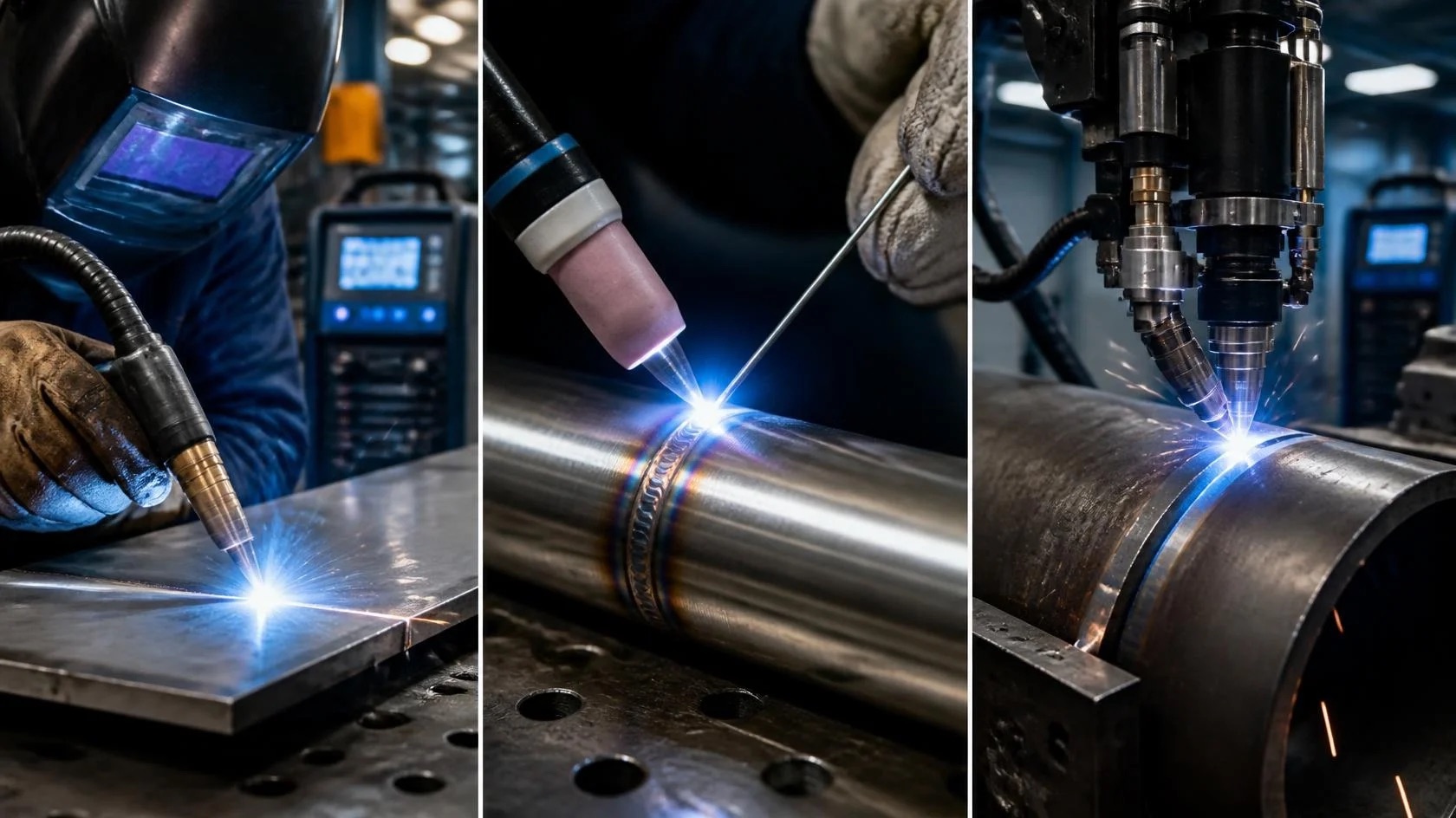
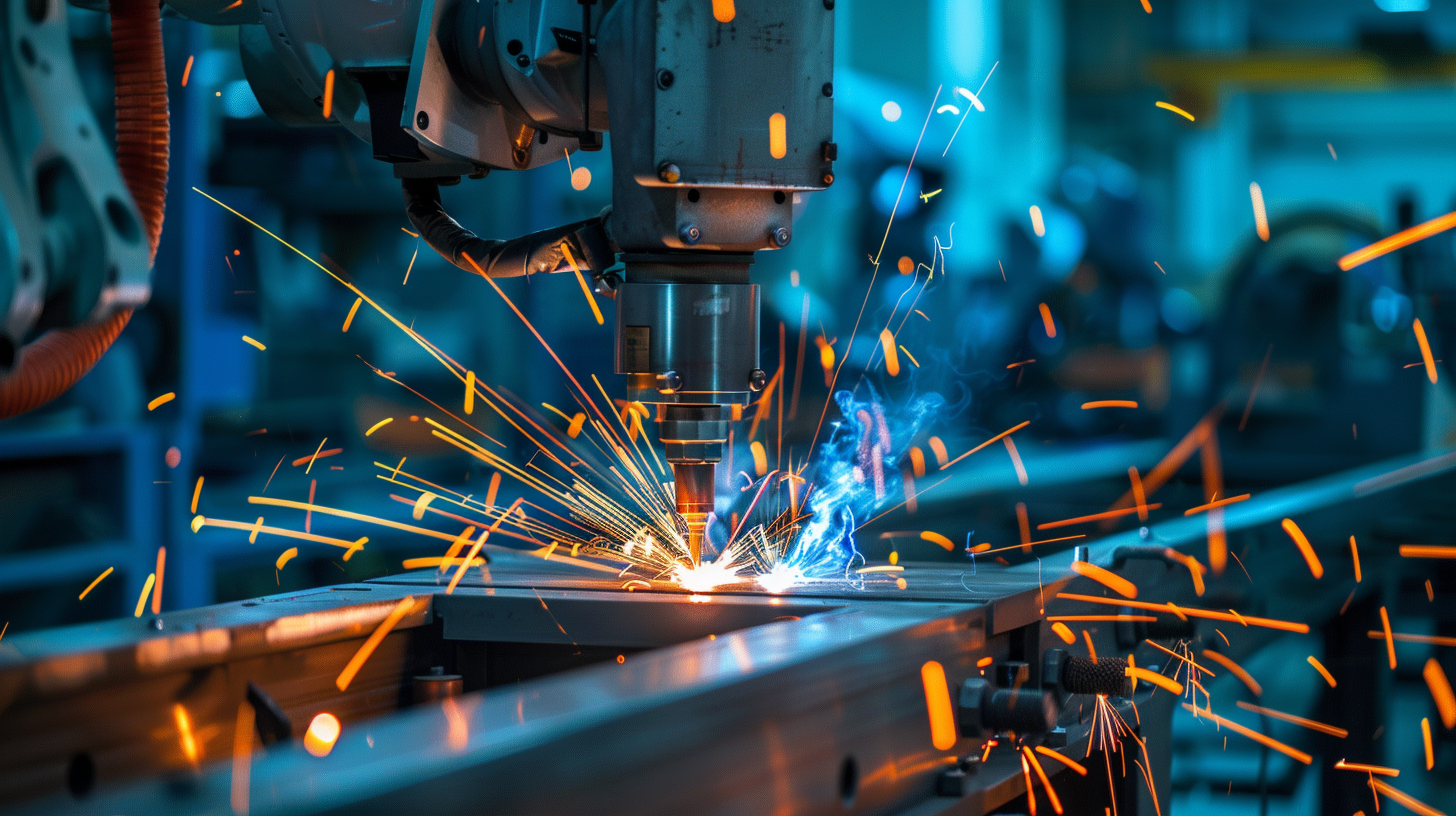
Welding automation is responsible for most of the operations in ship building making it one of the biggest layers for a shipyard for improving competitiveness. The starting point for most of the yards is semi-automatic welding which includes moving from manual stick welding to gas-shielded processes that can be adapted in automated systems. At this point, automation can take several forms. For example, welding tractors and carriages remove the torch from the welder’s hand entirely, running along tracks or magnetic bases to complete long fillet and seam welds with consistent quality. On the other hand, oscillating welding heads are valuable for difficult positions to obtain better weld quality as a bonus. Panel line systems are used to represent large and purpose-built machines that weld steel plate into the sections of the ships at high speed by often using submerged arc processes. Robotic systems have also seen vast growth. The new robotic systems use laser scanning to detect part positions automatically which reduces the set up time to just a few minutes and allows the operator to simply place the parts and start the machine.
It is difficult to find skilled welders across major shipbuilding nations which makes automation a practical way to maintain the output. This has also become a trend due to emergence of mobile and development of collaborative robots that are specifically designed to work alongside humans in tight and hazardous shipyard spaces.
Welding Automation in Oil & Gas
Quality and consistency are two non-negotiable requirements of the oil and gas industry. A failed weld in a pipeline, storage tank or pressure vessel not only causes downtime, it also leads to environmental and safety incidents. Thus, welding automation play a key role in offering quality and consistency in the oil and gas sector. Automation also supports the fabrication of support structures and gathering lines, often in remote and offshore locations where the equipment should be durable and easy to transport. Also, the transportation of storage and pipeline of crude oil relies heavily on automated welding to produce long transmission pipelines without leaks as even a minor defect can compromise the entire line. Downstream refining operators also depend on automated welding for the complex networks of the pipes, pressure vessels and furnaces where structural integrity is critical for safer operations. Portability is another key requirement for this sector. Automated equipment is used in oil and gas welding for carriages, wire feeders, manipulators and positioners. Thus, they are designed to be moved to the job site as there is so much work happening on pipelines, storage tanks and remote installations.
Welding Automation in Renewable Energy Sector
The renewable energy sector includes wind turbine towers, nacelle components and increasingly solar mounting structures and each of them comes with a different welding challenge. For example, wind tower sections are large-diameter, thick-walled steel cylinders requiring long, high-integrity circumferential welds making them idea for automated welding processes like submerged arc welding. Wind and solar projects are typically built at a large scale with many identical or near-identical structural components required across a single project. Repetition is another factor where automation performs the best and delivers consistent weld quality without the day-to-day variability that comes with the manual welding. With the constant rise in the manufacturing of renewable sectors to meet the demands, automated and semi-automated welding processes have become important for the production of large structural components.
Commonalities Between these 3 Sectors
Below stated are some of the common factors among the shipbuilding, oil and gas and renewable sectors:
- Labor Availability drives Adoption: In all the three sectors, there is a massive shortage of skilled laborers which motivates the manufacturers to automate the processes that were manual.
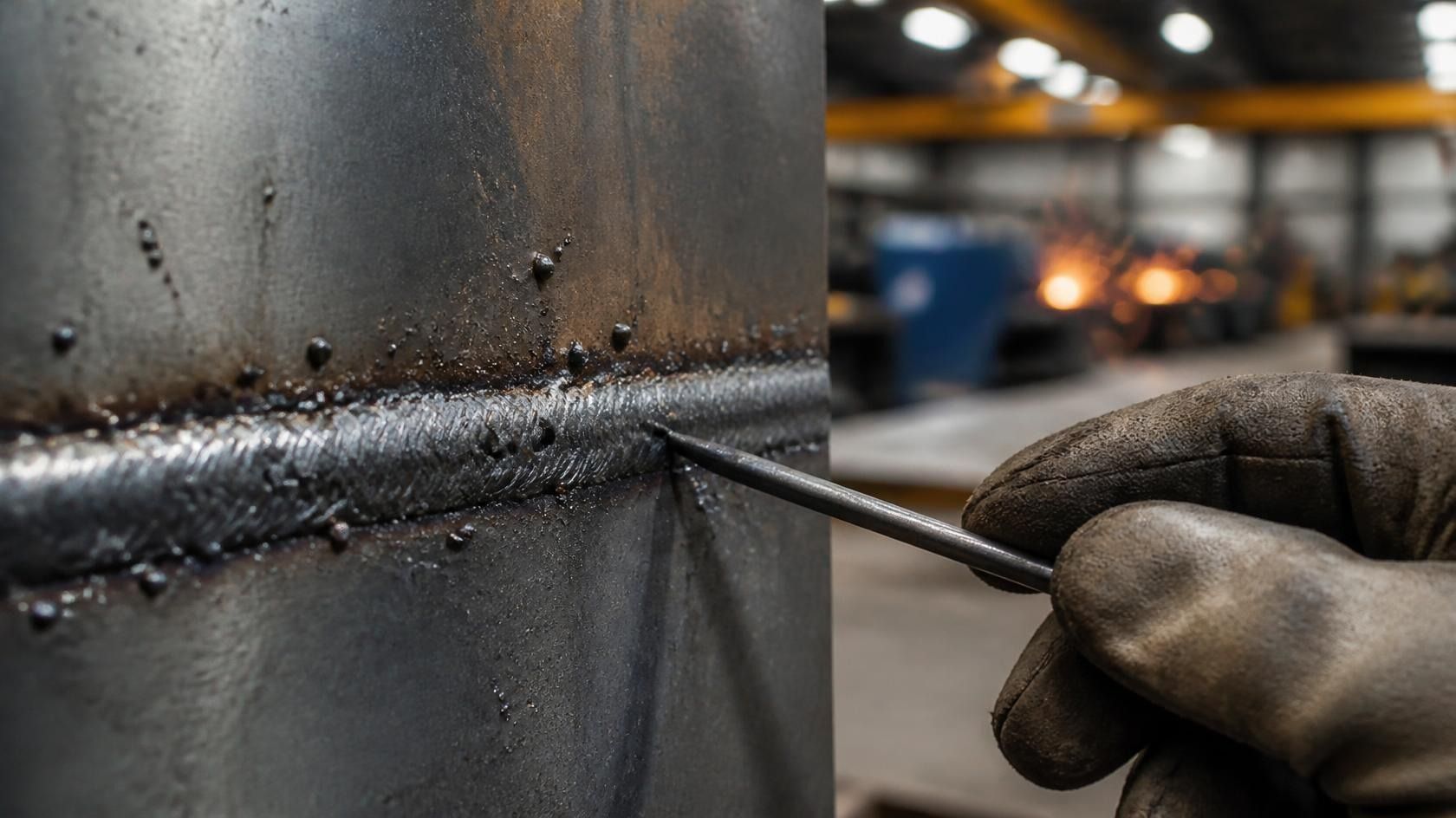
- Consistency Reduces Risks: Automated processes tend to produce more uniform weld quality in comparison to manual welding which directly reduces the risk of costly failures or rework.
- Portability Matters as much as Power: In all 3 industries, major amounts of work happens on a large and fixed structure or remote sites, unlike the factory assembly line which makes the portable, track-mounted or mobile automations systems extremely valuable for these sectors.
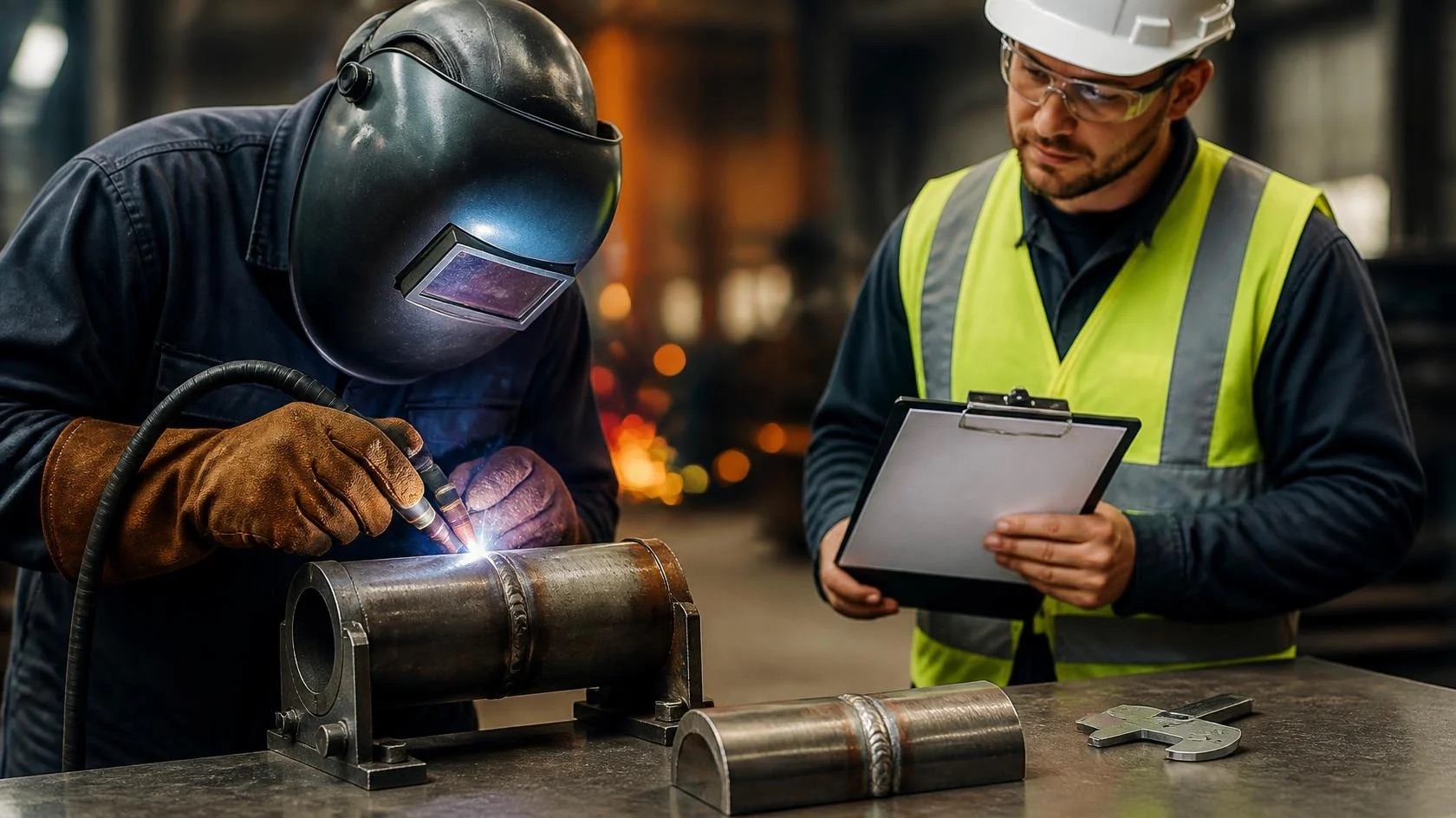
- Training Remains Essential: Automation doesn’t eliminate the need for skilled people. Instead, it shifts their role toward machine operation, setup and troubleshooting making proper training and phase-in plan a critical aspect to make the maximum use of new equipment.
How to Choose the Correct Welding Automation
Each of the above mentioned 3 industries has different structures, materials and working conditions and require a different set of tractors, carriages, robotic systems or fixed-position welding lines. However, the commonality between all 3 sectors is that automation works best where the welds are repeated at scale, where consistency plays a key role in safety or performance and where the skilled labor is not easily available. Fabricators can turn this investment into an advantage rather than adopting it as a generic solution.
Take Away
This is a brief explanation about the importance of welding automation in sectors like shipbuilding, oil & gas and renewable energy. We hope this information will be effective for you. Please let us know through your valuable feedback and the suggestion in the drop box.