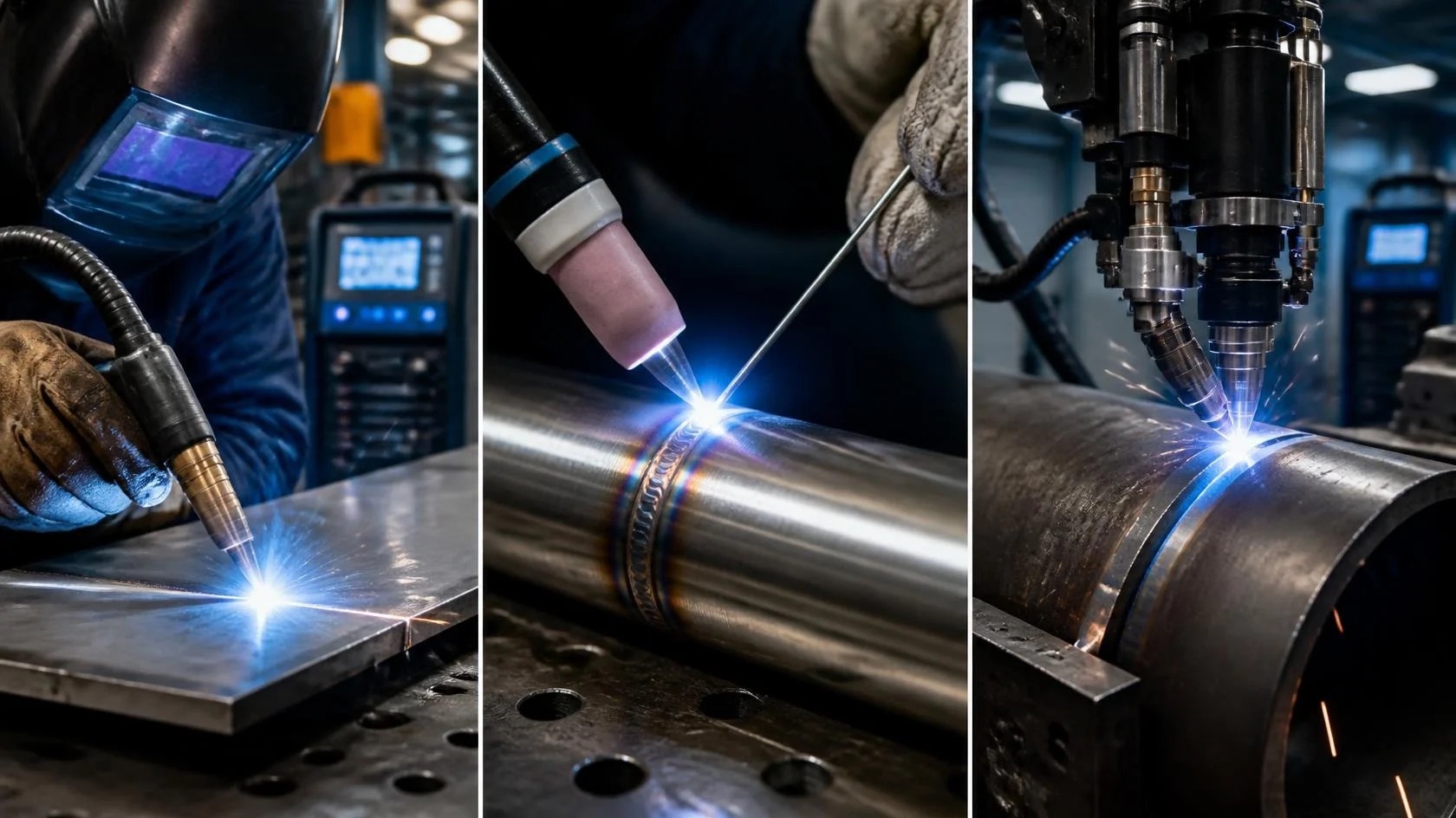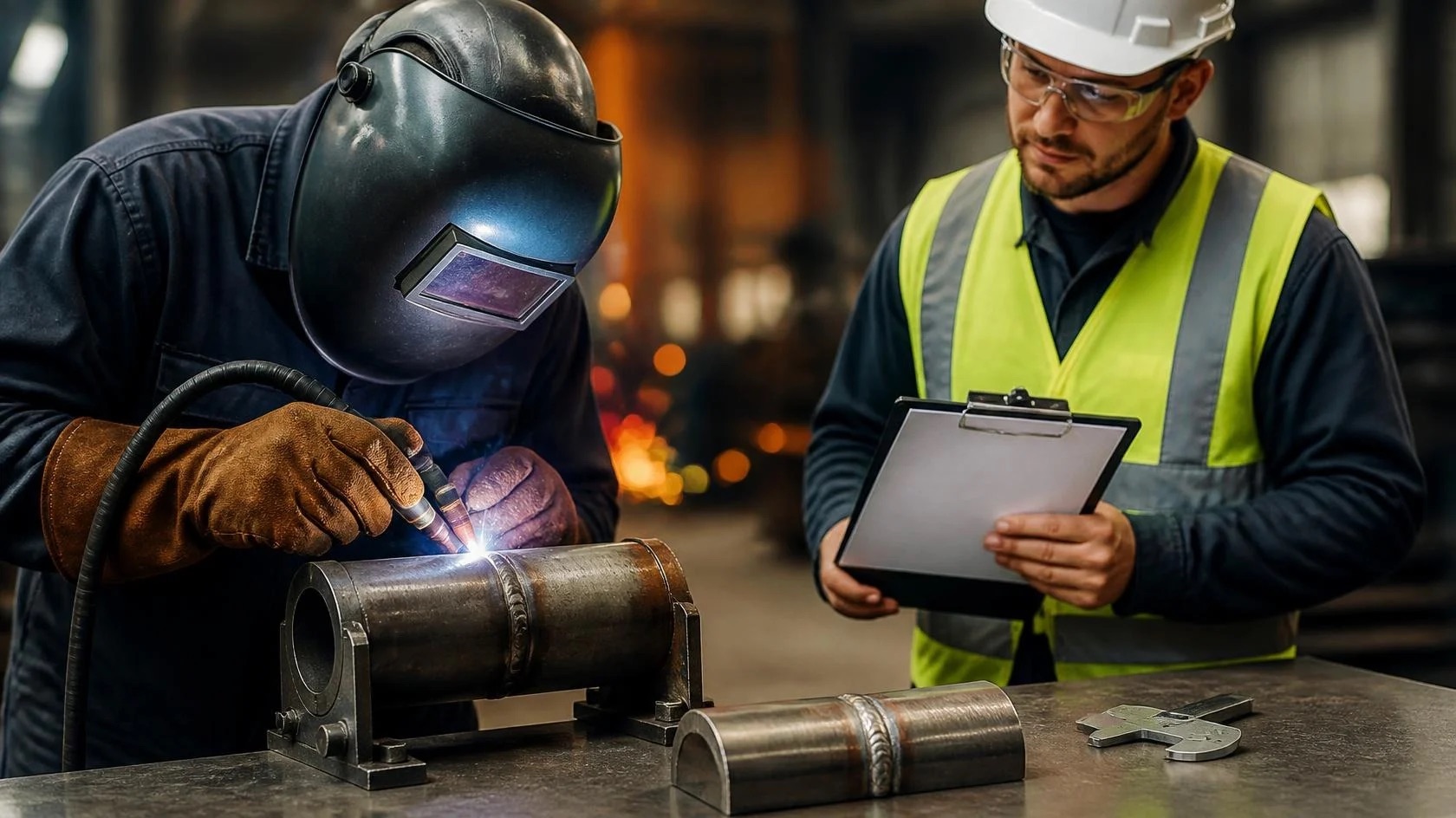
Most welding defects trace back to a small set of root causes: contamination or moisture, wrong welding parameters, poor joint preparation or technique, and the wrong or poorly stored consumables. The fastest way to fix a defect is to identify it correctly, match it to its likely causes, and correct one variable at a time rather than changing everything at once.
How to Diagnose a Weld Defect in Four Steps
- Step 1 — Identify the defect. Use visual inspection first. If the defect could be below the surface (porosity, lack of fusion, slag, cracks), confirm it with the appropriate non-destructive test.
- Step 2 — Check the consumables. Confirm the electrode, wire or flux is the right type, is clean and dry, and has been stored as the manufacturer specifies.
- Step 3 — Check the parameters. Compare current, voltage, travel speed, gas flow and preheat against the WPS.
- Step 4 — Check preparation, technique and environment. Look at joint cleanliness, fit-up, electrode angle, arc length, drafts and the condition of the equipment.
Quick Diagnosis Table
| Symptom | Most likely cause | First thing to check |
|---|---|---|
| Small holes or pinholes in the bead | Gas contamination, moisture, dirty base metal | Shielding gas flow, electrode/flux dryness, joint cleanliness |
| Groove along the weld toe | Current too high, travel too fast, wrong angle | Amperage and travel speed against the WPS |
| Lots of metal droplets around the weld | Arc too long, voltage too high, wrong gas or damp consumables | Voltage, gas mix, wire and electrode condition |
| Trapped non-metallic material in the weld | Poor cleaning between passes, low heat, wrong technique | Interpass cleaning and heat input |
| Weld metal not bonding to base metal or previous bead | Insufficient heat, fast travel, wrong angle | Current, travel speed and torch/electrode angle |
| Cracks in or next to the weld | Hydrogen, restraint, rapid cooling, poor bead shape | Preheat, low-hydrogen consumable storage, joint restraint |
Porosity
What it is
Porosity is gas trapped in the weld metal as it solidifies, showing up as pinholes on the surface or hidden voids inside the weld.
Common causes
- Moisture in electrodes, flux or wire
- Rust, oil, paint or moisture on the base metal
- Too little, too much, or disturbed shielding gas (drafts, leaks, blocked nozzle)
- Damaged or leaking gas hoses and fittings
- Arc length too long, letting air into the weld pool
Fix and prevention
- Store and dry electrodes and flux as the manufacturer directs, using a drying or holding oven for low-hydrogen types.
- Clean the joint area to bright metal before welding.
- Check gas flow, hoses, connections and the torch nozzle; shield the weld area from drafts.
- Keep a consistent, shorter arc length.
Undercut
What it is
Undercut is a groove melted into the base metal at the edge of the weld and left unfilled. Excessive undercut weakens the joint and creates a stress point.
Common causes
- Welding current too high
- Travel speed too fast
- Arc length too long
- Incorrect electrode or torch angle, or too much weaving at the edges
Fix and prevention
- Reduce current or voltage to the WPS range.
- Slow the travel speed and pause briefly at the edges of a weave so the pool can fill.
- Correct the torch or electrode angle and shorten the arc.
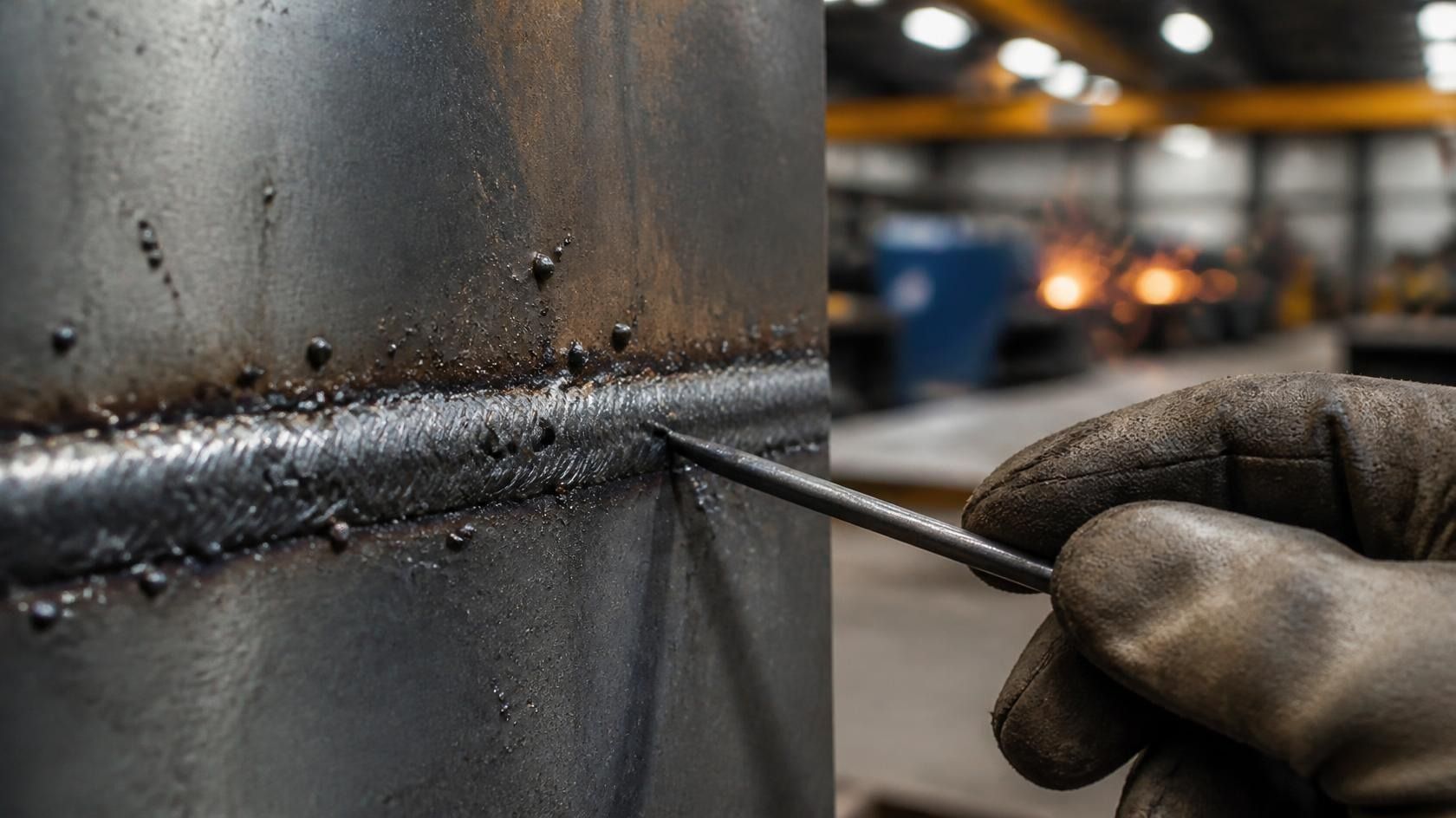
Spatter
What it is
Spatter is small droplets of molten metal thrown out of the weld pool that stick to the surrounding surface. It wastes filler metal and adds cleaning time.
Common causes
- Voltage or current too high for the wire or electrode
- Unsuitable shielding gas mix or poor gas coverage
- Damp or contaminated wire and electrodes
- Poor work (earth) connection causing an unstable arc
- Worn contact tips or irregular wire feed
Fix and prevention
- Set parameters to the wire manufacturer’s recommended range and the WPS.
- Check the work clamp, cable connections and contact tip condition.
- Use the recommended gas mix and keep consumables clean and dry.
- Consider a pulse-capable machine on applications where spatter and cleanup time are a recurring cost.
Slag Inclusion
What it is
Slag inclusion occurs when non-metallic slag becomes trapped inside the weld metal instead of floating to the surface. It is common in stick, flux-cored and submerged arc welding.
Common causes
- Slag not fully removed between passes
- Heat input too low for the slag to stay liquid and float out
- Poor technique, such as an erratic weave or incorrect angle
- Deep, narrow grooves that make slag hard to reach and remove
Fix and prevention
- Clean thoroughly between passes, including the toes and corners of each bead.
- Use the correct current and travel speed so the slag stays molten and rises.
- Improve joint design and access where the groove traps slag.
- In submerged arc welding, keep the flux clean and free of contamination; a flux recovery unit helps reuse flux without carrying debris back into the process.
Lack of Fusion and Incomplete Penetration
What it is
Lack of fusion is when weld metal fails to bond to the base metal or to an earlier bead. Incomplete penetration is when the weld does not reach the full depth of the joint root. Both are serious because they are often hidden inside the weld.
Common causes
- Heat input too low (current or voltage too low, or travel speed too fast)
- Incorrect torch or electrode angle
- Poor fit-up, root gap too small, or joint preparation or bevel angle inadequate
- Dirty joint surfaces or heavy mill scale
Fix and prevention
- Increase heat input within WPS limits or slow the travel speed.
- Check the bevel angle, root face and gap during fit-up; accurate bevelling equipment improves consistency here.
- Clean the joint and each previous bead before the next pass.
- Confirm with radiography or ultrasonic testing where the code requires it.
Cracking
What it is
Cracks are the most dangerous weld defect. They can appear in the weld metal or in the heat-affected zone, sometimes hours after welding has finished.
Common causes
- Hydrogen picked up from damp electrodes, flux or contaminated surfaces (hydrogen-induced cracking)
- High joint restraint combined with rapid cooling
- Inadequate preheat on thick or hardenable steels
- Poor bead shape, such as deep, narrow beads, or unfilled craters at the end of a weld
Fix and prevention
- Use low-hydrogen consumables and keep them dry in a heated oven as the manufacturer specifies.
- Apply the preheat and interpass temperature given in the WPS and control cooling.
- Fill craters and use a bead shape that is not excessively deep and narrow.
- Do not simply re-weld over a crack. Remove it fully and consult the welding engineer on the repair procedure.
How Equipment Condition Affects Weld Quality
Many defects that look like technique problems are really equipment problems. These are worth checking before blaming the welder:
- Welding machine output: Machines that drift out of calibration give parameters different from the dial settings.
- Cables, earth clamps and connections: Loose or damaged cables cause unstable arcs and spatter.
- Torches and consumable parts: Worn contact tips, damaged nozzles and clogged liners disturb wire feed and gas coverage.
- Consumable storage: Damp electrodes and flux are a leading cause of porosity and hydrogen cracking, which is why drying and holding ovens matter.
- Fume extraction: Good extraction keeps the weld area visible and the welder in a better working position.
When to Call for NDT or Third-Party Inspection
Surface defects can be seen, but porosity, lack of fusion, slag inclusions and cracks are often hidden. Consider non-destructive testing, such as radiographic, ultrasonic, magnetic particle or dye penetrant testing, when the weld is code-governed, safety-critical or contractually required to be inspected, when defects keep recurring and the cause is unclear, or when a client or authority requires an independent witness. An independent inspector can also confirm that repairs have been carried out to an approved procedure.
Frequently Asked Questions
What causes porosity in welds?
Porosity is caused by gas trapped in the weld pool. The usual causes are moisture in electrodes or flux, contamination on the base metal, poor shielding gas coverage, and an arc that is too long.
How do I reduce spatter in MIG welding?
Check that voltage and wire feed speed match the wire manufacturer’s recommendations, use the recommended shielding gas, keep the work clamp and contact tip in good condition, and keep the wire clean and dry.
What is the difference between lack of fusion and incomplete penetration?
Lack of fusion is a failure of weld metal to bond with the base metal or an earlier bead. Incomplete penetration is when the weld does not reach the full depth required at the joint root.
Why does a weld crack after it cools?
Delayed cracking is commonly linked to hydrogen in the weld, high restraint and fast cooling, especially on thick or hardenable steels. Using dry, low-hydrogen consumables and applying the specified preheat are the main preventive measures.
Can I repair a defective weld myself?
Minor surface defects can often be dressed or re-welded under your normal procedure. For code-governed or critical welds, the repair should follow an approved repair procedure and be re-inspected.
Reduce Rework with the Right Equipment and Support
Aavishkar Group supplies welding machines, consumables, electrode drying ovens, flux recovery units, torches, cables and fume extraction systems, along with third-party inspection and technical consultancy. If you are seeing recurring defects and are not sure whether the cause is equipment, consumables or procedure, our team can help you find it.