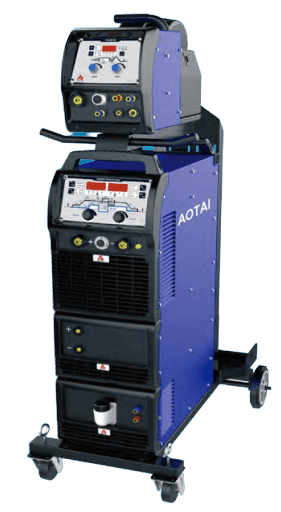
Home » Hot & Cold Wire TIG
For applications involving the use of filler wires two approaches are available – the cold wire and the hot wire process. A cold-wire feed increases productivity: The welding speed increases and the filler metal is fed precisely and evenly to the weld pool. This allows even less-experienced welders to achieve outstanding results. The process is widely used in the field of pressure vessel fabrication and shipbuilding. TIG hot-wire welding was developed from cold wire TIG welding. In TIG hot-wire welding, the filler metal is heated. The advantages include – deposition amount and rate increase, rise in the welding speed and reduction in fusion
We are the authorized dealers for West India Distributor for Hot and Cold Wire TIG welding machines of Aotai. Kindly browse through the catalogue of the listed products and submit a request for the proposal of your desired equipment. Our team will surely get back to you with the same.
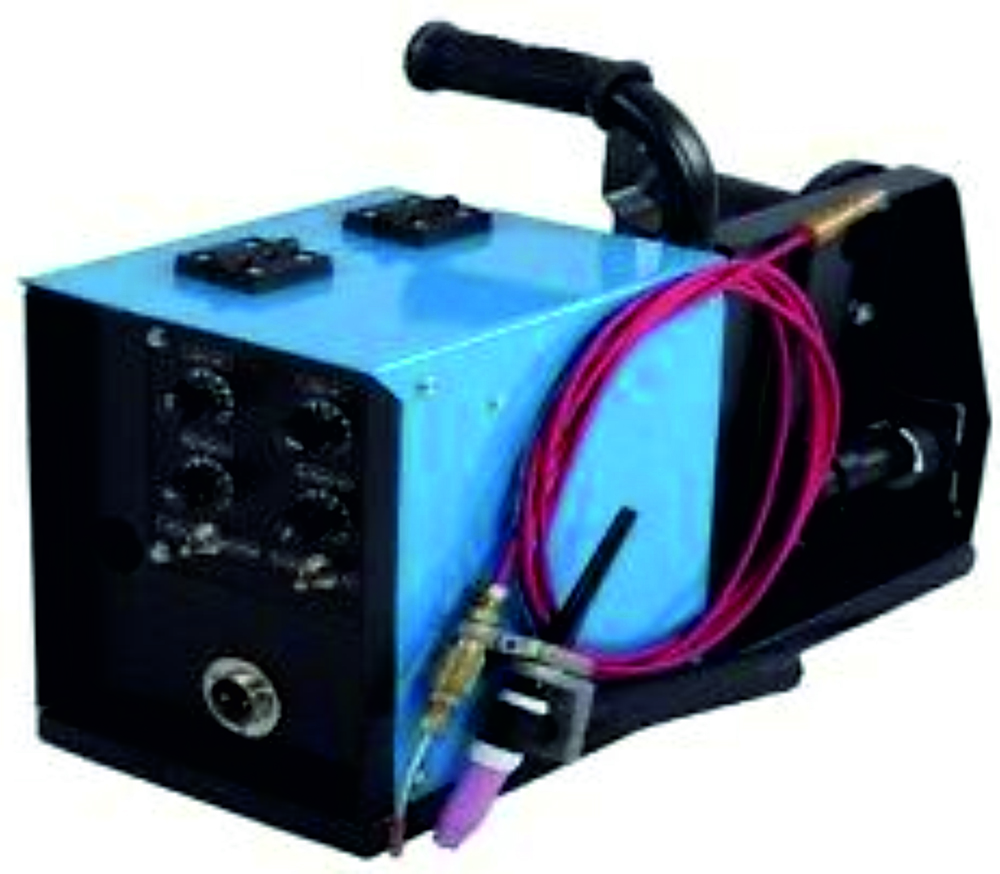
Hot & Cold Wire TIG (Tungsten Inert Gas) welding is an advanced variation of conventional TIG welding designed to enhance productivity and weld quality. Unlike standard TIG — where the filler wire is manually added at ambient temperature — this method uses a controlled wire feed system:
Cold Wire mode feeds the filler wire consistently into the weld pool, improving deposition precision and reducing operator dependency.
Hot Wire mode pre-heats the filler wire before it enters the weld pool, allowing it to melt more rapidly and consistently, which increases travel speeds and deposition rates without compromising weld integrity.
Together, these techniques deliver smoother control of the weld pool and higher efficiency compared to manual TIG welding.
The Hot & Cold Wire TIG process combines both efficiency and precision, offering several practical benefits:
Higher deposition rates and productivity: Pre-heating the filler wire and controlled feeding significantly increases welding speed while maintaining uniform deposition.
Improved weld quality: Controlled heat input reduces defects, maintains a stable arc, and results in consistent bead profiles with minimal dilution.
Reduced operator skill dependency: Automated wire feeding and control systems help less-experienced welders achieve predictable, high-quality results.
Enhanced process adaptability: Suitable for a wide range of metals — including stainless steels, aluminum, and nickel alloys — and various welding positions.
These benefits make the process highly suitable for industrial sectors where time, quality, and repeatability matter.
Selecting Hot or Cold Wire mode depends on your production priorities and material characteristics:
Cold Wire is ideal when you want precise control over filler input with minimal heat alteration of the weld zone. This mode supports consistent weld pool dynamics, especially for thinner sections or when thermal distortion needs to be minimized.
Hot Wire delivers enhanced penetration and faster deposition, making it suited for thicker sections or when productivity is a priority without sacrificing weld integrity.
In practice, operators often start with Cold Wire to stabilize the weld pool and switch to Hot Wire to drive productivity and deeper fusion as needed.