If you’ve ever sat in a production meeting arguing over whether to buy another standard machine or commission something built from scratch, you already know this decision isn’t as simple as comparing price tags. It’s about matching the right tool to the right problem — and getting that wrong can cost a plant far more than the machine itself.
Special Purpose Machines (SPMs) are custom-engineered systems built around one specific part, process, or production sequence, while off-the-shelf equipment is designed to handle general-purpose tasks across many different applications. SPMs cost more upfront and take longer to build, but they’re engineered to hit exact tolerances, cycle times, and throughput targets that catalog machines simply weren’t designed for. Off-the-shelf equipment wins on speed to deploy and flexibility; SPMs win on precision, repeatability, and long-run efficiency.
The trick is knowing which side of that line your project actually sits on — and that’s what this guide is here to help you figure out.
What Makes a Machine “Special Purpose”?
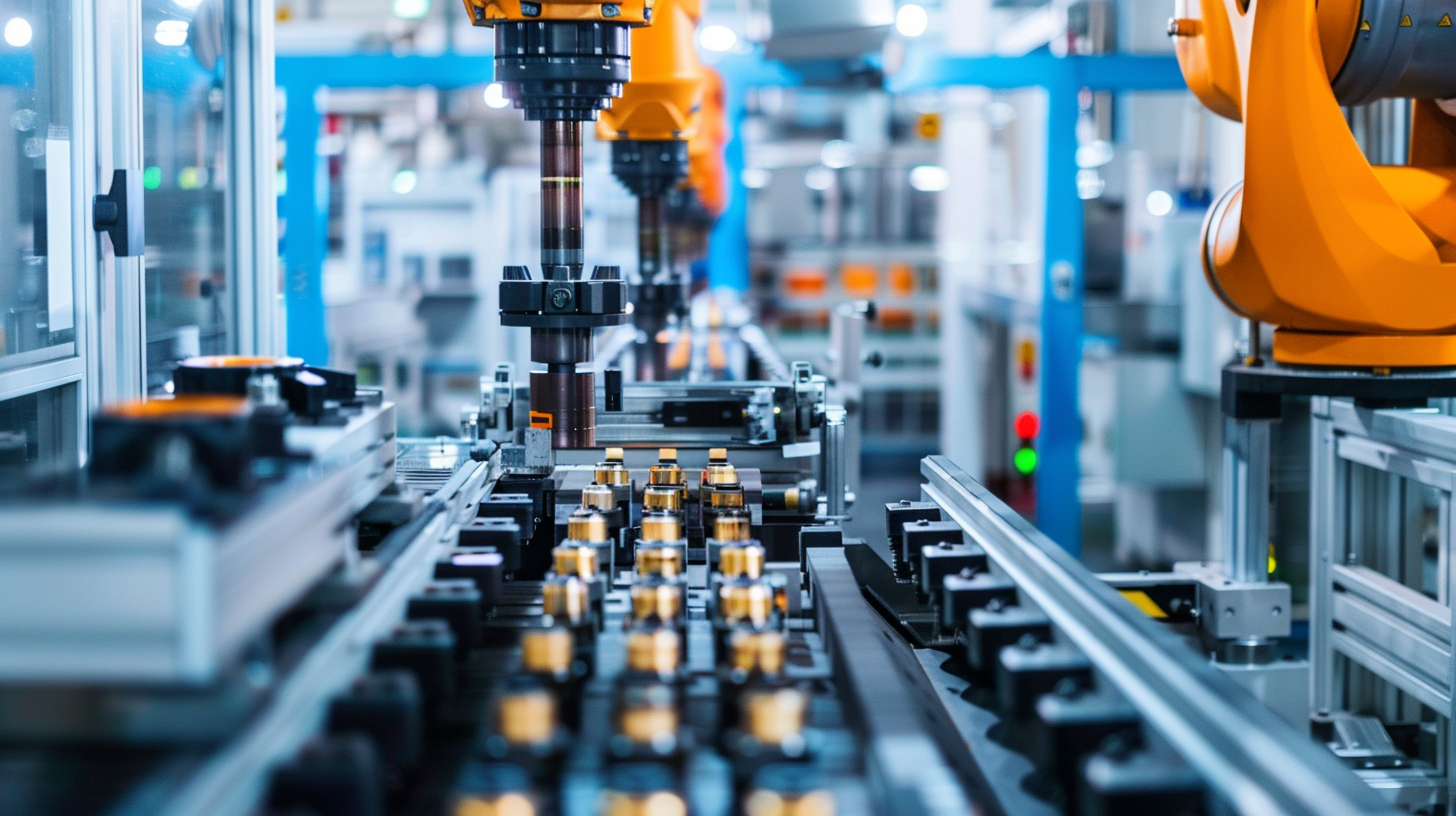
A Special Purpose Machine isn’t just a fancier version of a standard machine — it’s a fundamentally different design philosophy. Instead of adapting your process to fit a machine that already exists, the machine is engineered around your process from the ground up.
Custom-Engineered Around Your Process, Not the Other Way Around
Every SPM is built to match a specific part’s geometry, a specific cycle-time target, and a specific sequence of operations. Where a standard drilling machine, CNC mill, or welding rig is designed to serve dozens of possible applications reasonably well, an SPM is designed to serve one application exceptionally well. That means custom jigs, fixtures, tooling, and often a purpose-built frame engineered to eliminate vibration and hold dimensional accuracy under your exact operating loads.
This is also why SPMs are sometimes called “bespoke machines” — every single one is genuinely unique, built to a customer’s specific requirements rather than pulled from a catalog.
Common Applications Where SPMs Outperform Standard Equipment
SPMs tend to show up wherever a part or process has something a general-purpose machine can’t handle gracefully:
- Unusual part geometry — long, oddly shaped, or asymmetric components that don’t sit well in standard fixtures
- Multiple operations in one cycle — combining drilling, tapping, riveting, or inspection into a single integrated station instead of routing parts through several separate machines
- Automatic loading and unloading requirements that eliminate manual handling
- Tight tolerance, high-repeatability work in automotive, aerospace, electronics, and medical device manufacturing, where even small inconsistencies trigger costly quality escapes
Industries like automotive component manufacturing and precision electronics rely heavily on SPMs precisely because “close enough” isn’t good enough when you’re producing tens of thousands of identical parts a month.
How Do You Know When Standard Equipment Can’t Keep Up?
Not every automation need justifies a custom build. Standard equipment — conveyors, feeders, labelers, general-purpose CNC machines — genuinely is the better choice most of the time. The question isn’t “which is better,” it’s “which one fits where you actually are right now.”
The Warning Signs You’ve Outgrown Off-the-Shelf Equipment
You’re probably past the point where standard equipment can carry you if you’re seeing:
- Cycle times that plateau no matter how much you tweak the process, because the machine wasn’t built for your part in the first place
- Rising scrap or rework rates tied to inconsistent manual handling or operations split across multiple machines
- Capacity ceilings — you’re turning down orders or adding shifts because throughput can’t scale further on current equipment
- Repeated OEM audit findings around process consistency, traceability, or repeatability
- Labor-intensive changeovers or loading/unloading that eat into productive run time
If none of these apply yet, off-the-shelf equipment — possibly with some modified fixturing — is almost always the more sensible, lower-risk investment.
Matching Volume and Complexity to the Right Investment
Production volume and part complexity are the two biggest variables in this decision. Here’s a rough framework for where each option tends to make sense:
| Production Volume & Part Complexity | Off-the-Shelf Equipment | Special Purpose Machine (SPM) | Typical ROI Timeline |
|---|---|---|---|
| Low volume, high product mix, simple geometry | Ideal — flexible, fast to deploy, low upfront cost | Rarely justified; engineering cost outweighs benefit | Immediate–6 months |
| Medium volume, moderate complexity, some repeatability | Workable with added fixtures/tooling | Becomes competitive once changeover losses add up | 12–24 months |
| High volume, tight tolerances, single part family | Struggles — cycle time and consistency limits appear fast | Strong fit — built around the exact part and process | 12–30 months |
| Very high volume, multi-operation sequence | Requires several separate machines, more floor space and labor | Best fit — combines operations into one integrated system | 18–36 months, often faster once labor and scrap savings compound |
These ranges track with what independent automation-ROI research generally finds: manufacturers that build a full ROI model — capturing labor, scrap, and quality-cost savings rather than just machine price — typically see payback in the 18–30 month range, with annual savings equal to roughly a quarter to nearly half of the original investment, according to industry ROI research from Oxmaint.
A Real-World Example: Solving a Drilling and Riveting Bottleneck
A useful, publicly documented case comes from a published engineering case study in the International Journal of Advances in Science and Technology. The project involved a supplier producing a power steering housing cover — a roughly 2.5 kg automotive component — for a major automotive OEM.
The original process used a separate radial drilling machine and a separate riveting machine, creating a bottleneck and inconsistent output. The engineering team designed and built a Special Purpose Machine that combined drilling and riveting into a single station with a multi-spindle drilling head, targeting production of around 26,000 components per month. The resulting machine cut cycle time to roughly 80 seconds per component while holding positional accuracy within 147.2 mm ± 0.2 mm between centers — a level of consistency the original two-machine setup couldn’t reliably deliver.
The broader lesson here isn’t the specific numbers — it’s the pattern: when a process has hit a structural bottleneck that no amount of tuning on general-purpose machines will fix, combining operations into a purpose-built machine is often the more sustainable fix.
Step List: How to Scope a Custom Automation Project
If you’ve concluded an SPM is the right direction, scoping it properly upfront saves enormous headaches later. Here’s a practical sequence to follow:
- Map the current process in detail. Document existing cycle times, defect rates, manual touchpoints, and every operation the part goes through today.
- Define your non-negotiables. Nail down required tolerances, target cycle time, monthly volume, floor space constraints, and any regulatory or safety standards that apply.
- Get detailed quotes from two or three SPM builders, not just a single number. Ask for a breakdown by subsystem — frame, tooling, controls, vision/inspection — so you can compare apples to apples.
- Request a design risk review (a Design FMEA or equivalent) before committing to a build, so failure modes are caught on paper instead of on the shop floor.
- Confirm flexibility needs. If your product mix could shift, discuss modular tooling or quick-changeover options now — retrofitting flexibility in later is far more expensive.
- Build a full ROI model, factoring in labor savings, scrap reduction, and the cost of quality escapes — not just the machine’s purchase price.
- Plan the commissioning timeline, including Factory Acceptance Testing (FAT) and on-site installation, and build buffer time into your production schedule around it.
- Line up training and maintenance support before the machine arrives so your team isn’t learning the system during a production ramp.
Frequently Asked Questions
What does a Special Purpose Machine typically cost? Costs vary enormously by region and complexity, but as a benchmark, single-station SPMs commonly run from the tens of thousands into the low hundreds of thousands of dollars, while multi-station or rotary assembly systems can run several times higher, based on published industry pricing guides. Machines built for cleanroom, medical, or high-precision applications generally sit at the upper end of that range because of tighter validation and documentation requirements.
How long does an SPM project take, from order to production? Lead times typically range from around 6–12 weeks for simpler, single-operation machines up to 16–24 weeks for complex multi-station or rotary systems, from final design approval through Factory Acceptance Testing, according to published SPM builder timelines. Build in extra time for installation, commissioning, and operator training on top of that.
Should I retrofit an existing machine or invest in a new build? Retrofitting can make sense when the existing frame, structure, and safety systems still meet your requirements and the underlying process hasn’t fundamentally changed — you’re mainly upgrading controls, tooling, or specific stations. A new build usually makes more sense when part geometry has changed significantly, when your industry’s compliance or safety standards have moved on since the original machine was built, or when the retrofit starts requiring so much rework that you’re essentially rebuilding the machine anyway. When in doubt, it’s worth asking a builder to quote both paths side by side.
Key Takeaways
- Off-the-shelf equipment wins on flexibility and speed to deploy — it’s the right call for low-volume, high-mix, or simple-geometry work.
- SPMs win on precision, repeatability, and combined operations — they earn their keep at higher volumes, tighter tolerances, or when multiple operations need to become one integrated process.
- Watch for the warning signs: plateaued cycle times, rising scrap, capacity ceilings, and recurring audit findings all point toward outgrowing standard equipment.
- Scope before you spend. A documented process map, clear non-negotiables, and a full ROI model (not just machine price) prevent expensive surprises later.
- Lead times and costs vary widely — get detailed, itemized quotes from multiple builders rather than comparing single top-line numbers.
Conclusion
Choosing between a Special Purpose Machine and off-the-shelf equipment isn’t about which option is “better” in the abstract — it’s about matching the investment to your actual volume, complexity, and growth trajectory. Off-the-shelf equipment will keep serving you well for flexible, lower-volume work. But once cycle times plateau, quality costs creep up, and your part or process genuinely needs something no catalog machine can deliver, a well-scoped SPM investment tends to pay for itself faster than most teams expect.
If you’re weighing this decision for your own production line, the smartest next step is a proper process audit before you request a single quote — it’s the difference between buying a machine and engineering a solution.
Ready to explore what a custom-built solution could do for your production line? Explore our Special Purpose Machine solutions →