Home » Orbital Welding
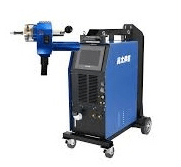
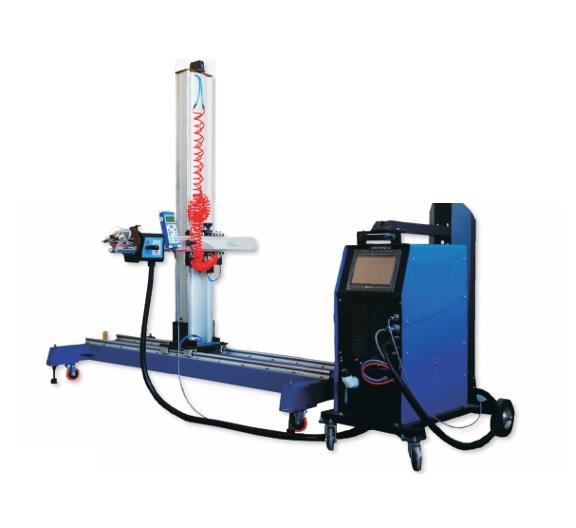
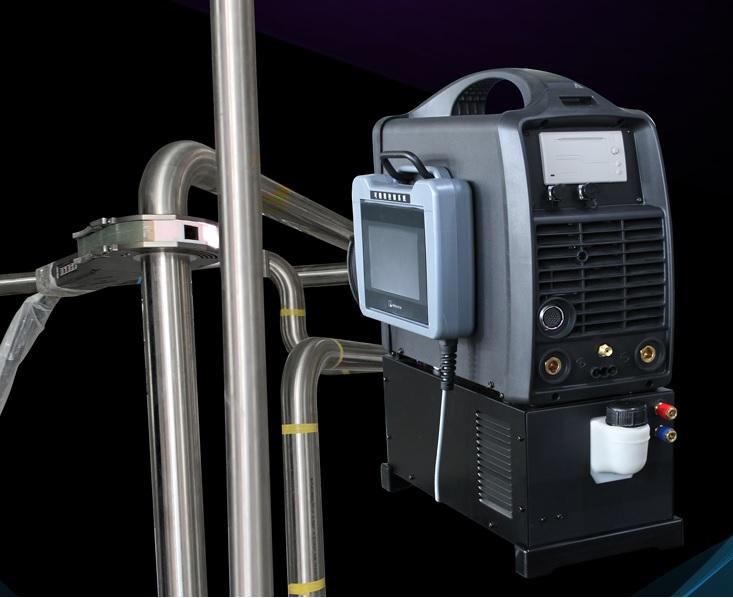
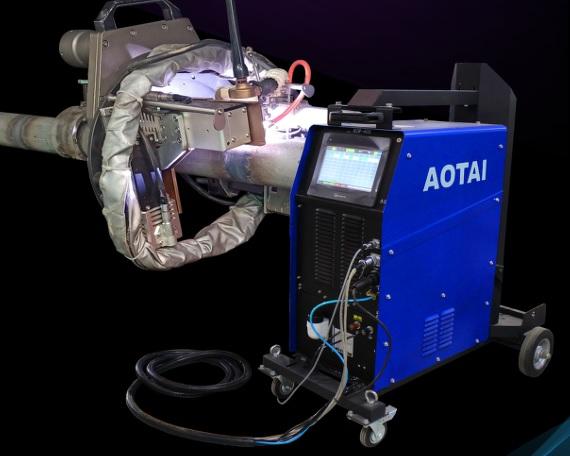
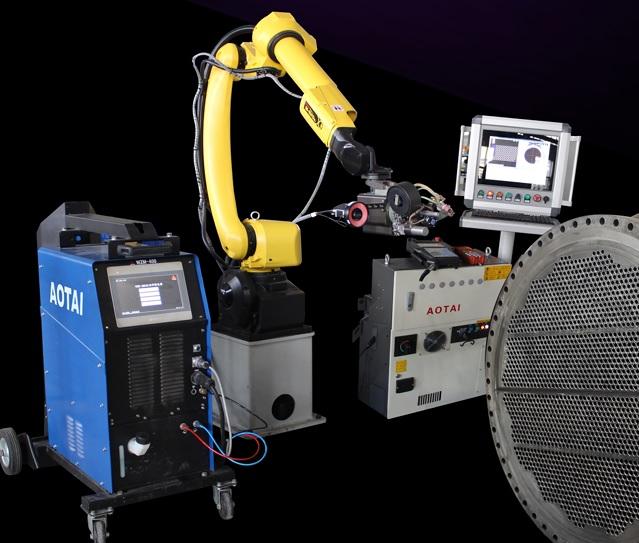
Orbital welding systems are developed for all position tube-tube sheet automatic welding. Compared with manual welding, it is more efficient, more reliable, more convenient and aesthetically more appealing. Orbital welding uses a specialized machine that clamps the tube or pipe to be welded while the welding arc rotates around the workpiece, in an ‘orbit’. Because the welding parameters are set by a microprocessor, the settings can be stored and reused, making this a highly repeatable process. The recommended areas of use for these machines include – Boiler, Chemical Industry, Heat Exchanger, Air-Conditioner, Power and Plant Piping.
We are authorized dealer for AOTAI in India for the range of Orbital welding machines handling sales, service & application support. Kindly browse through the catalogue of the listed products and submit a request for the proposal. Our team will surely get back to you with the same.
We offer following range of equipments in orbital welding
Orbital welding is an automated welding process in which a welding torch (often using the gas-tungsten-arc welding, GTAW/TIG process) rotates 360° around a fixed tube or pipe, producing a continuous weld. The tube stays stationary while the weld head orbits around it, ensuring a uniform, circular weld seam.
Typically, you fix the tubes or pipes with proper clamps or fixtures, program the welding parameters (current, speed, gas flow, etc.), and let the machine perform the weld — giving precise, repeatable results.
Orbital welding offers several key benefits vs manual welding:
Consistent, high-quality welds: Because the process is automated and parameters are tightly controlled, weld seams are more uniform with consistent penetration and fusion.
Repeatability and efficiency: Once set up, the same weld schedule can be repeated multiple times, saving time and reducing variability between welds.
Improved productivity and lower labour cost: Automation reduces manual labour demand; there’s less rework and fewer defects.
Better safety and cleaner welds: Orbital welding often happens in clean, controlled atmospheres (e.g. inert gas), reducing contamination and exposure risks for welders. This is especially important in industries demanding sterility or high purity (pharmaceuticals, semiconductors, food processing, etc.).
Capability for complex, tight or hard-to-reach spaces: Because the weld head does the rotation and the pipe remains stationary, orbital welding can manage welds in constrained spaces or awkward orientations where manual welding would be hard or unsafe.
Orbital welding works well for many metals — including stainless steel, carbon steel, nickel alloys, titanium, copper, aluminium and other alloys — especially when clean, high-integrity welds are needed.
It is widely used for tube-to-tube or pipe-to-pipe joining, and is especially well suited for circular joints (cylindrical tubes/pipes) — this is where the orbital weld head can consistently rotate and weld the joint.
Common industries and applications: high-purity piping for pharmaceuticals, biotech, food & beverage processing; semiconductor industry clean-room pipes; chemical, power plants, aerospace, shipbuilding, heavy pipework or industrial piping systems where reliability, leak-tightness and weld integrity are critical.
While orbital welding offers many benefits, there are some limitations and challenges to be aware of:
Not suitable for all joint types: It works best for circular/tubular joints — non-cylindrical shapes or irregular geometries are often not compatible.
High initial equipment cost: Orbital welding machines (power supply, weld head, control system, etc.) are more expensive than typical manual welding setups.
Need for proper tube/pipe preparation: Weld quality depends heavily on correct tube end preparation — ends must be square, burr-free, with minimal gap/mismatch when fitting tubes together.
Requires trained operator and maintenance: Even though the process is automated, a skilled operator is needed to set parameters, monitor the weld quality, and maintain the equipment. Improper settings or neglect can lead to defects.
Limited to certain diameters/wall-thickness ranges: For some weld heads (especially enclosed/closed-chamber heads), tube diameters may be limited, and wall thickness beyond certain limits may require special preparation (e.g. beveling) to ensure weld quality.
To perform orbital welding properly, you need: A programmable power supply (to control current, voltage, gas flow, wire feed if filler is used, travel speed, etc.).
A weld head (orbital welding head) — sized to match the pipe/tube diameter — that clamps around the tube and houses the electrode, shielding gas chamber, and possibly wire feed if filler metal is used.
If required, a wire-feed (filler material) system, and sometimes a cooling system (water or air) depending on material and operating conditions.
Proper tube/pipe end preparation: ends must be square, burr-free (both inside & outside), well aligned, with minimal gap and minimal wall thickness variation at weld zone for optimal weld integrity.
A trained operator who can program parameters, monitor the process, and perform maintenance/troubleshooting. Monitoring is important especially for critical welds — mistakes in parameters (current, travel speed, gas flow, alignment) can cause defects like lack of fusion, uneven welds, porosity, etc.