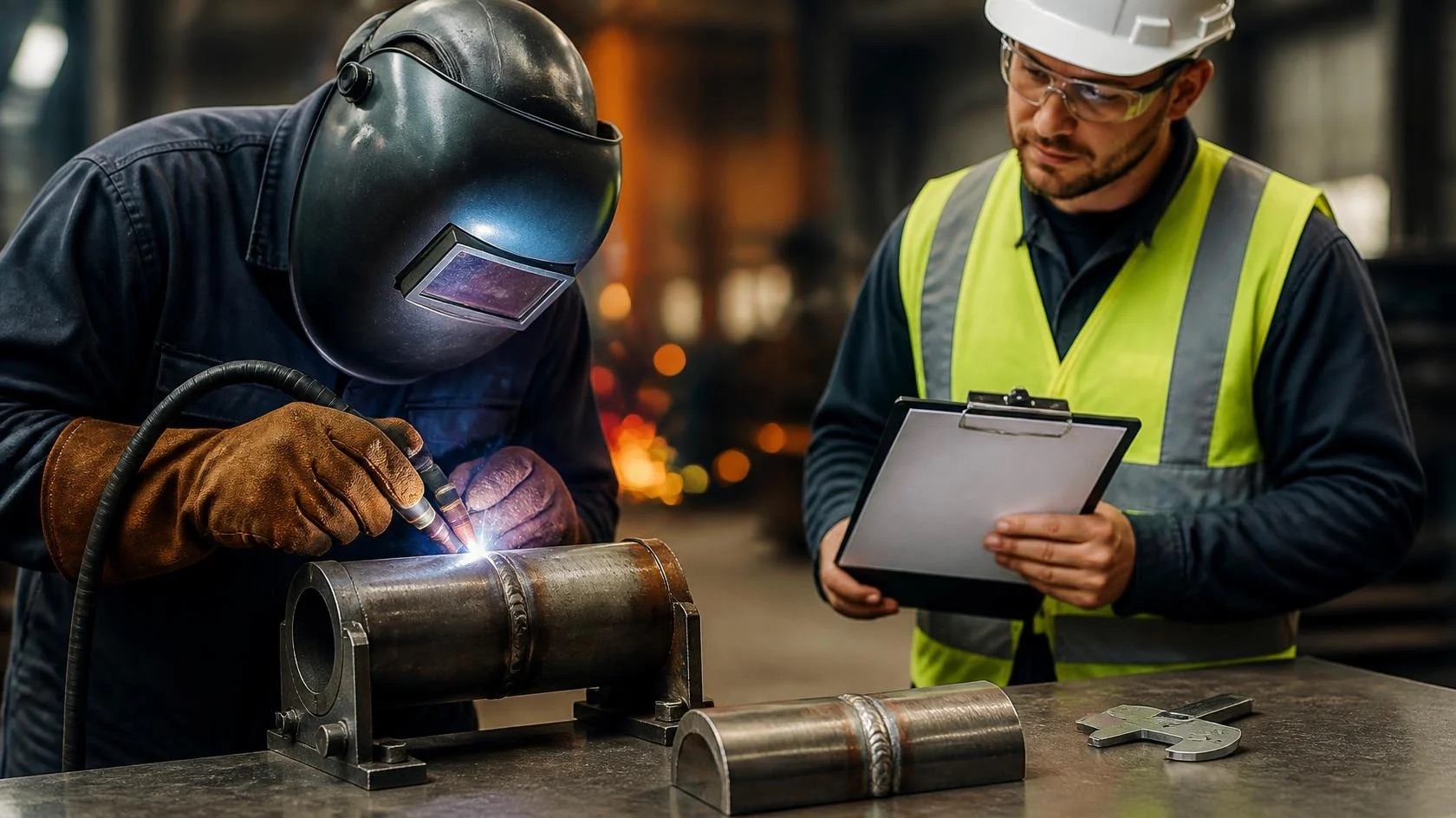
If you’ve ever watched a welder inspect a freshly cut pipe end or plate edge before laying down a bead, you’ve seen why bevelling matters. A square-cut edge simply won’t let weld metal fuse properly through the full thickness of the material. That’s where pipe & plate bevelling equipment comes in — the machines that cut a precise angled edge so welders can achieve strong, code-compliant joints instead of shallow, failure-prone ones.
Whether you’re fabricating pressure vessels, laying pipeline, building a ship’s hull, or putting together structural steel, edge preparation is one of those steps that’s easy to overlook until something goes wrong. A poorly bevelled edge can mean incomplete fusion, trapped slag, or a joint that fails under pressure years down the line. This guide walks through the main types of bevelling machines, where each one earns its keep, and what to actually look for before you buy or rent one.
What Is Pipe & Plate Bevelling Equipment?
Bevelling equipment is a category of power tools that mill, shear, or grind an angled edge onto the end of a pipe or the edge of a metal plate, readying it for welding. For materials thicker than about 5 mm, a simple square edge doesn’t allow the weld to penetrate fully, so an angled cut — the bevel — is machined in to create room for weld metal to fill and fuse properly across the joint. Get this step wrong, and even a skilled welder can’t fully compensate for it.
There are two broad approaches to how the bevel is actually cut: thermal methods (like flame or plasma cutting) and cold mechanical methods (milling, shearing, or grinding with a rotating cutter). Cold bevelling is increasingly the preferred choice in critical applications because it doesn’t introduce a heat-affected zone (HAZ) or thermal distortion, which matters a lot when you’re working with alloys or thin-walled material that’s sensitive to heat.
Common Bevel Profiles
Most bevelling jobs fall into a handful of standard profiles, and knowing them helps when you’re specifying equipment:
- V-bevel: The most common profile, typically cut at angles between 15° and 60°, used for medium-thickness plates and pipes.
- Y-bevel: A V-bevel with a small flat “root face” (usually 1.5–3 mm) left at the base. This is the standard specification for pressure vessels, pipelines, structural steel, and shipbuilding because it helps control weld penetration.
- J-bevel: A curved profile used on thicker sections where a straight V-cut would remove too much material.
- Compound and double bevels: Used on thick plate or pipe where welding from both sides is required.
Why Precision Here Actually Matters
Bevel angle and root face consistency directly affect weld quality, filler metal consumption, and how many passes a welder needs to complete the joint. An inconsistent bevel forces welders to compensate manually, which slows production and increases the risk of defects that only show up during pressure testing or in-service inspection. This is exactly why manual grinding has been steadily losing ground to dedicated bevelling machines on any job where consistency and code compliance matter.
Types of Pipe & Plate Bevelling Equipment
Pipe Bevelling Machines
Pipe bevelling machines are generally split into stationary and portable categories.
Stationary machines live in a fabrication shop and are built for high-volume, high-precision work — think pressure vessel manufacturers or heat exchanger fabricators who need to bevel hundreds of pipe ends to the same exact angle. They typically offer wide diameter ranges and tight tolerance control.
Portable machines are designed to travel with the job — pipeline construction sites, shipyards, refineries, and power plants where the pipe can’t be brought to the machine. Many run on pneumatic, hydraulic, or battery power, and clamp onto the pipe using one of two systems:
- Internal clamping, where expanding jaws grip from inside the pipe, leaving the outer surface completely untouched.
- External clamping, where the machine tightens around the outside of the pipe.
Plate Bevelling Machines
Plate bevellers fall into two main categories based on how they cut:
- Milling-type bevellers use a rotating cutter head to machine the edge, producing a smooth, code-quality finish suitable for pressure vessels and structural steel where surface quality is inspected closely.
- Rolling shear bevellers use hardened rollers to deform and shear the plate edge. These run 2–3 times faster than milling machines but leave a rougher surface — generally acceptable for general fabrication work rather than critical pressure applications.
Beyond straightforward bevels, many modern plate and pipe machines can also perform facing, J-bevels, and cladding preparation, which is handy if your shop handles a variety of joint designs rather than a single standard cut.
Real-World Application: Heat Exchanger and Pipeline Fabrication
One place where bevelling precision is non-negotiable is heat exchanger manufacturing. In these units, hundreds of individual tubes are welded to a single tube sheet, and even one uneven bevel on one tube can compromise the mechanical seal of the entire assembly — leading to leaks that are expensive and time-consuming to trace and repair after the unit is in service. Fabricators in this space rely heavily on dedicated pipe bevelling machines rather than manual grinding precisely because the tolerance for error, multiplied across hundreds of joints, is so small.
A similar dynamic plays out in pipeline construction and shipbuilding. Pipeline crews working in the field need portable machines that can produce a consistent, code-compliant bevel (often per API 1104 or similar pipeline welding standards) on-site, joint after joint, without the variability that comes from hand grinding. Shipyards face their own twist on the problem: fuel, ballast, cooling, and exhaust piping often run through extremely tight, confined spaces, which is why compact, portable bevelling machines have become the standard tool for both new-build fabrication and on-vessel repair work in that industry.
How to Choose the Right Bevelling Equipment
Picking the right machine comes down to matching the equipment to your material, your environment, and your production volume. A few questions worth working through before you buy:
- What’s your material range? Check the diameter and wall-thickness range (for pipe) or thickness range (for plate) the machine is rated for, and make sure it covers both your current jobs and any you’re likely to take on soon.
- Where will the work happen? Shop-based, repeatable production favors stationary machines; field and site work calls for portable, often battery- or pneumatic-powered units.
- What bevel profile and tolerance do you need? Pressure vessel and pipeline work generally demands milling-type accuracy and Y-bevel capability; general fabrication can often get by with faster rolling shear equipment.
- Does heat input matter for your material? If you’re working with stainless, duplex, or other heat-sensitive alloys, cold mechanical bevelling avoids the HAZ and distortion that thermal cutting methods introduce.
- How will it clamp? Internal clamping preserves the pipe’s outer surface — useful for coated or finished pipe — while external clamping is often faster to set up.
- What’s your total cost of ownership? Factor in cutter/blade replacement costs, maintenance, and operator training, not just the purchase price.
Match the Machine to the Job, Not the Other Way Around
It’s tempting to buy the most capable machine on the market, but oversized or overspecced equipment adds cost without adding value if your typical job is mid-range plate or standard-diameter pipe. Conversely, underpowered equipment that can’t consistently hit your required tolerances will cost you more in rework than it saved upfront.
Don’t Overlook Operator Ergonomics
Portable machines in particular vary a lot in weight, vibration, and ease of clamping. A lighter, well-balanced unit reduces operator fatigue on long shifts and tends to produce more consistent results simply because it’s easier to control.
Key Takeaways
- Bevelling prepares pipe and plate edges for welding by machining an angled cut that allows proper weld penetration and fusion.
- Cold mechanical bevelling (milling or shearing) avoids the heat-affected zone that comes with thermal cutting, which matters most for heat-sensitive alloys.
- Stationary machines suit high-volume shop production; portable machines suit field, pipeline, and shipyard work.
- Milling-type bevellers deliver a smoother, code-quality finish; rolling shear machines trade some surface quality for speed.
- Match diameter/thickness range, bevel profile, power source, and clamping method to your actual jobs before buying.
Conclusion
Pipe and plate bevelling equipment doesn’t get the attention that welding machines or cutting torches do, but it quietly determines whether every weld that follows has a fair shot at passing inspection. Getting the edge preparation right — consistent angle, clean surface, correct root face — sets up welders to do their best work instead of fighting an inconsistent joint. Whether you’re outfitting a fabrication shop or equipping a field crew for pipeline work, take the time to match the machine’s capabilities to your actual material range, environment, and quality requirements rather than defaulting to whatever’s cheapest or most popular.
If you’re evaluating bevelling equipment for your next project and want guidance on matching a machine to your specific pipe diameters, plate thickness, or site conditions, reach out to a specialist supplier who can walk through your requirements before you commit.