Introduction
In today’s fast-paced world, the fabrication industry is facing more pressure due to labor shortages, rising costs, increasing demand for precision, etc. In these tough times, welding automation emerges as one of the most transformative investments of the fabrication sector. Automated welding systems are known for executing précised and repeatable welds much faster in comparison to human labor and reducing defects and scraps. In today’s era of skilled welder shortages and safety concerns, automation has become a necessity.
Top 5 Welding Automation Solutions for the Fabrication Sector
Below stated are the top 5 welding automation solutions to increase the productivity of fabrication works:
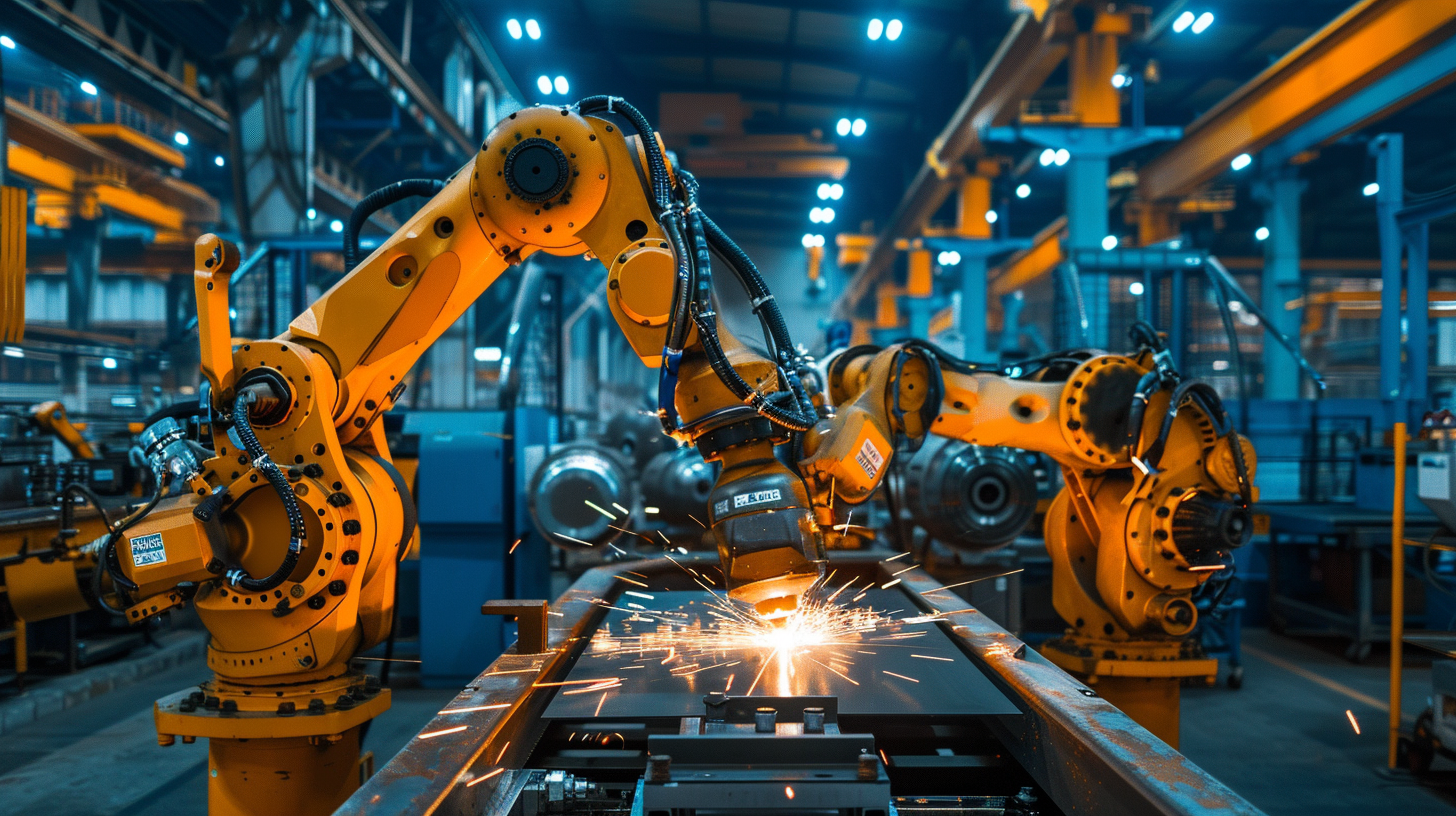
- Robotic Welding Systems: Robotic welding is considered one of the most impactful systems in the automation category as it directly replaces one of the most labor-intensive and skill-dependent processes. This automation also brings significant gains in consistency, speed and cost control. Automation welding robots can keep the torch on nearly 90–100% of the time which is approximately 30% for a human welder. These robots can also work in multiple shifts without fatigue or breaks. Also, one cobot operator had reported doubling or tripling the output as robots handled most of the welds continuously. Robotic welding systems are powerful in high-environments such as aerospace, automotive, and industrial manufacturing sectors. Suppliers tend to offer advanced arc welding robots that are equipped with integrated sensors and can maximize weld quality while enabling automated tracking. This emerges as a solution to various issues such as labor shortage, rework and scrap generation, etc.
- Collaborative Robots (Cobots) for Flexible Welding: Collaborative robots are also known as cobots. Unlike industrial robots, these cobots are designed to work safely alongside human operators. Thus, they are considered ideal for small and medium fabrication shops that require flexibility without a massive investment. Cobots include in-built sensors and safety features such as collision stops, so they can run without any issue. They are smaller in size and slower in comparison to industrial robots, however they are easier to deploy. They are flexible in nature and can be often programmed by hand-guiding or intuitive interferences. This makes them the best choice for small and medium shops that require changeovers quickly or assistance with repetitive tasks. Modern cobots systems allow the welders to focus on more complex tasks while running the routine seam automatically. Some cobots are so advanced that they can be operated by the welders having no robot experience. Running those robots does not require any programming experience either. Cobots are a suitable option for fabrication shops dealing with high-mix and lower volume jobs.
- CNC Automation and Robotic Machine Trading: CNC machining is considered one of the biggest hidden productivity bottlenecks in the fabrication shops. Robotic machine tending automates loading, unloading and part-handling tasks in machining workflows. Automatic part transfer enables the machinery to run continuously, minimizes the downtime and improves throughput and consistency. CNC machining is also considered a foundation of metal fabrication. It is evolved being driven by robot automation. Its machines include automation interfaces which reduces the cost and complexity of adding a robot or cobot in the machines. This eliminates the idle machine time, reduce reliance on difficult-to-hire CNC operators and scale both high-mix and high-volume productions.
- Smart Cutting and Bending Systems: Sheet metal cutting and bending is traditionally a labor-intensive process requiring skilled operators and time-consuming manual set ups. However, smart cutting and bending systems are different. They integrate robotic and offline programming software to deliver highly adaptive sheet metal processing and eliminate time-consuming programming. These systems also synchronize tasks as sheet loading, laser cutting and press brake bending through standardized communication protocols. It also enables seamless interoperability with robots and coordinated workflow across a fabrication cell. This results in benefits such as high-mix, low-volume jobs, reduction of scrap and wear and great improvement in consistency. Smart cutting and bending systems are reliable for fabrication shops that handle a variety of part geometries and short production runs.
- Robotic Finishing, Grinding and Deburring: The finishing process of the fabrication tasks is always difficult as it is physically demanding and requires a certain level of consistency and precision which is difficult to maintain manually over long shifts. Some of these finishing tasks involve grinding, deburring and polishing which demands physical strength and precision requirements. Robotic finishing tends to reduce defects, improve the repeatability and handle dangerous processes more safely than manual labor. Apart from productivity, its safety benefits are also significant. These finishing tasks can carry risks such as injuries, dust exposure or repetitive strain. Automating these processes keeps the operators safe while delivering more consistent surface quality to every part.
Choosing the Correct Automation
Below stated are some of the factors to be considered while choosing the correct automation for one’s application:
- Production Volume and Mix: Robotic welding systems can be used for high-volume jobs whereas for high-mix and diverse job, cobots are favorable.
- Budget: Cobots and semi-robots are more budget friendly.
- Floor Space: Cobots are compact and easy to move making them ideal for small-scale shops.
- Operator Skill: Cobots are easy to train and does not require welding experience
- Safety Requirements: CNC Automation can be considered ideal for jobs with dangerous positions.
- Regulations and Standards: Any chosen automated system should match the welding regulations and standards.
Take Away
This is the brief explanation about automated welding systems, its types and factors to be considered while choosing them. We hope this information will be effective for you. Please let us know through your valuable feedback and the suggestion in the drop box.